
🚨Urgent: Missile Strikes Shelter in Ukraine! Rush Emergency Aid!
US Coast Guard Commissions New Arctic Icebreaker Storis to Boost Capabilities
Guest Contributor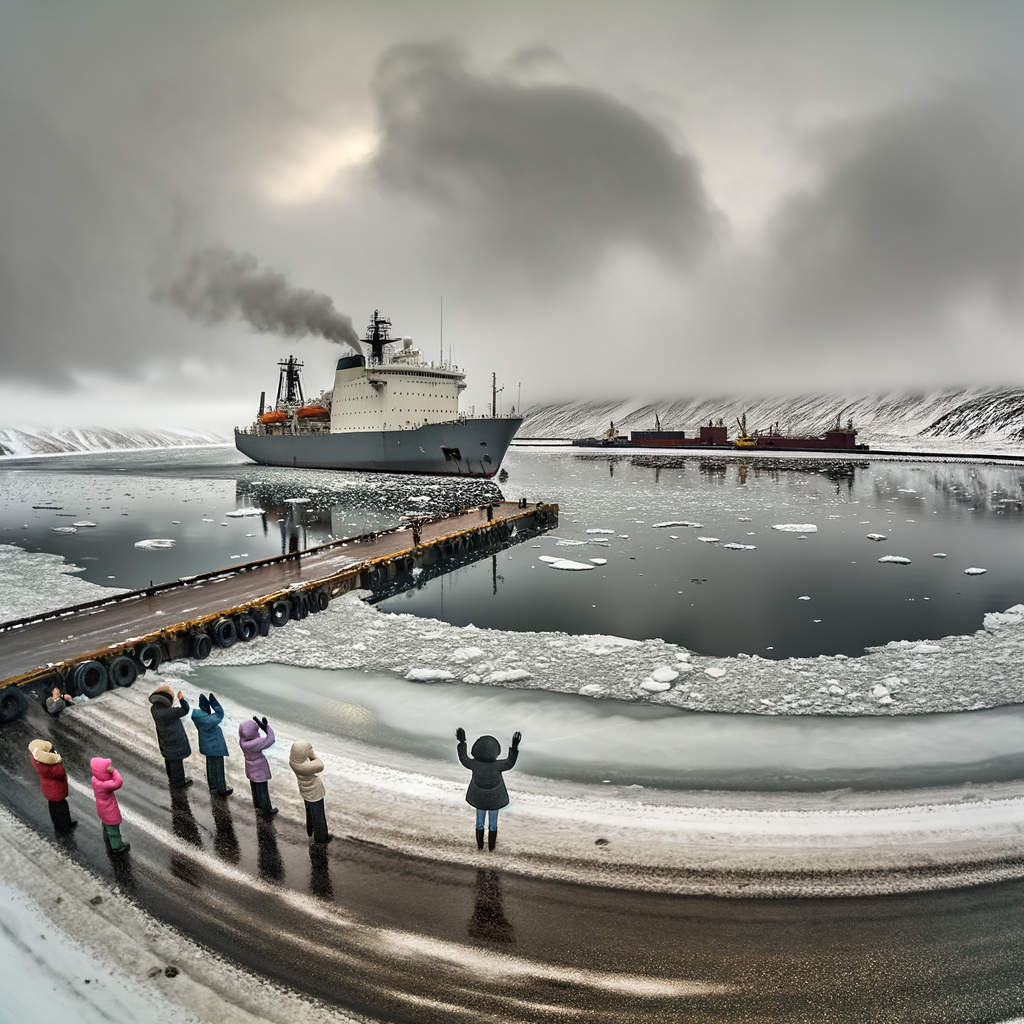
The United States Coast Guard has taken a significant step in bolstering its Arctic capabilities with the commissioning of its first oceangoing icebreaker in 25 years. The newly commissioned vessel, named Storis, marks a pivotal moment in U.S. maritime strategy, particularly as global interest in the Arctic intensifies. This development comes at a time when other nations, notably China, are expanding their presence in the region. The Coast Guard's move underscores a renewed focus on national security, environmental protection, and search-and-rescue operations in polar waters.

Storis, formerly a commercial oil exploration support vessel named Aiviq, was built in 2012 and acquired by the Coast Guard for $125 million. After undergoing modifications to suit service operations, the ship now stands ready to serve as a key platform for Arctic missions. It will supplement the Coast Guard’s limited icebreaking fleet until the first of three new heavy icebreakers, known as polar security cutters, is delivered in 2030.
This latest addition to the U.S. polar fleet comes at a critical juncture. According to gCaptain, a maritime industry publication, China has deployed five icebreaking research vessels to the Arctic since July, the largest such deployment to date. Coast Guard officials noted that two of these vessels entered U.S. Arctic territory. This increased activity highlights the strategic importance of the region and the growing competition over its resources and trade routes.
Acting Commandant Adm. Kevin Lunday emphasized the significance of the commissioning during a ceremony in Juneau, Alaska. "Storis adds vital capabilities to the U.S. polar icebreaker fleet at a critical time when our adversaries are expanding their activities in near-U.S. waters," Lunday stated. His remarks reflect the broader concerns about maintaining a strong U.S. presence in the Arctic amid shifting geopolitical dynamics and environmental changes.
The vessel’s name, Storis, pays tribute to a historic Coast Guard cutter that operated in the Bering Sea and along the Alaskan coast for over six decades. The original Storis was renowned for its role in saving mariners in distress and responding to natural disasters, including the nation’s largest recorded earthquake. Naming the new icebreaker after this legacy ship underscores the Coast Guard’s enduring commitment to maritime safety and service in the region.
While the new Storis will eventually be homeported in Juneau, it will initially be housed in Seattle alongside the service’s other icebreakers, Polar Star and Healy, until infrastructure in Alaska is completed. The decision to send the vessel directly to sea following its commissioning highlights the urgency of enhancing Arctic readiness.
Deputy Secretary of Homeland Security Troy Edgar also spoke at the ceremony, linking the commissioning to broader investments in the Coast Guard. He referenced the One Big Beautiful Bill Act, an investment initiative from the Trump administration that allocated $25 billion to upgrade Coast Guard vessels, aircraft, and shore facilities. "We really are focused on making sure that our adversaries get a clearer message that we will not back down," Edgar said, noting the Coast Guard’s role in protecting the northern border.
I found this detail striking: the idea to repurpose a commercial vessel for Coast Guard use was first proposed nearly a decade ago. It finally materialized through the Don Young Coast Guard Authorization Act of 2022 and received funding in the fiscal 2024 appropriations legislation. This long arc from concept to commissioning reflects the complexities of maritime procurement and the strategic patience required to build capacity in such a remote and challenging environment.
Senator Dan Sullivan of Alaska, who has supported the project since 2020, also highlighted the strategic importance of the Arctic. "This region is undergoing monumental change. Sea ice is receding. New trade routes are opening. Vast reserves of natural resources are becoming accessible. And our adversaries are moving fast to assert control," Sullivan said. His comments point to the broader implications of climate change and the race for influence in the region.
Following the ceremony, the Coast Guard offered public tours of the Storis before it departed Juneau for Seward. The ship will serve as a visible and functional symbol of the United States’ commitment to Arctic operations. In a related development, the Coast Guard also commissioned a new fast response cutter, the Earl Cunningham, in Kodiak, Alaska. Named after a surfman who died heroically in 1936 attempting to rescue two ice fishermen, the vessel honors the service’s tradition of bravery and sacrifice.
As the Arctic becomes increasingly central to global maritime strategy, the deployment of the Storis signals a clear intent by the United States to maintain a strong and responsive presence. The vessel’s capabilities will be crucial in navigating the evolving landscape of Arctic operations, from safeguarding national interests to supporting scientific and humanitarian missions.