Barn Owl Hangs From Barbed Wire Until a Farmer Risks His Fury to Help
Guest Contributor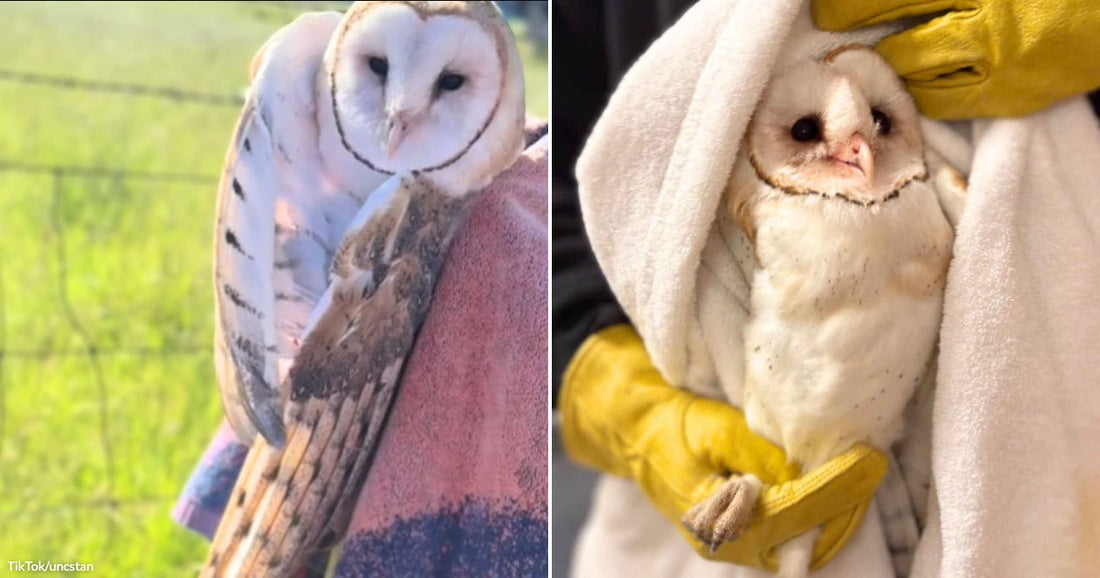
When an injured barn owl became tangled in a barbed wire fence along a rural Oregon road, it could easily have been a quiet tragedy that no one ever heard about. Instead, thanks to an observant passerby, a quick-thinking farmer named Lexie, and a dedicated wildlife rehabilitation team, this bird’s difficult journey has turned into an uplifting story of animal rescue that the internet has rallied behind. Along the way, it has also highlighted the vital work of wildlife hospitals and the people who devote themselves to helping injured animals heal and return to the wild.
According to the original report, the saga began on May 28, when Lexie received an urgent message from her sister-in-law about an owl caught in a barbed wire fence near her home. Barbed wire injuries can be devastating for birds of prey, especially to delicate wing tissue. Lexie immediately drove out, located the barn owl, and carefully freed him using gloved hands so she would not cause further harm. She then transported him to the Chintimini Wildlife Center, a nonprofit rehabilitation facility in Oregon that regularly treats injured wildlife.

Lexie later shared the experience on TikTok under the username @uncstan, expressing how thankful she was that her sister-in-law noticed something was wrong and reached out. She described the owl as seeming almost grateful, a detail that clearly resonated with viewers. As the bird’s story unfolded online, it quickly moved from a single rescue video to an ongoing narrative that many people followed closely, turning this “TikTok barn owl” into a small symbol of resilience.
Once the owl arrived at Chintimini Wildlife Center, the rehabilitation staff began documenting his progress through their own updates. Early on, they explained that he was significantly underweight, so they started him on what they called an “emaciation protocol” to carefully stabilize his condition. Severe emaciation requires slow, deliberate feeding so the bird’s body can adjust and avoid complications. At first, this meant tube feeding rather than solid food, a method that can be lifesaving but is also stressful for both patient and caregivers.

TikTok/uncstan
The team also shared that with barbed wire injuries, damage to the wing tissue often continues to reveal itself over several days. Even after an initial exam, deeper wounds and tissue problems can emerge later, which is why close monitoring is so important. At one point, staff added a wing wrap to help support healing of the largest wound. Videos showed veterinary team members handling the owl gently, adjusting the wrap, and checking his injuries while minimizing stress as much as possible.
As the days passed, the barn owl began to hit important milestones. The rescue’s social media updates celebrated each small step, from holding steady in his early treatment to the moment he was finally ready to try solid food. When he started accepting those solids and gaining weight, it was a major turning point. The staff described him as “one spicy fighter,” a phrase that captured both his spirited personality and the challenging nature of caring for a wild raptor that is not interested in being tamed.

Instagram/tallgrassdiaries
On June 6, Chintimini Wildlife Center shared one of the most hopeful updates yet. The owl, identified as barn owl #25-580 in their records and widely known online as the TikTok Barn Owl, had moved out of the “emaciation” classification. He was still underweight, but no longer in that most fragile category, which the center called “truly fantastic news.” In their words, the credit belonged to the rehabilitation team, who give the same detailed care to every patient, regardless of whether that animal has gone viral.
As his primary barbed wire wound on the back of his wing continued to heal, the staff also focused on another part of raptor recovery that people might not always think about: social needs. They moved him near four other barn owls so he could be around his own species again. These birds, known for their eerie and often loud vocalizations, reportedly enjoyed “screaming in symphony.” The rehabilitation staff jokingly referred to it as a “cacophony,” but the updates made it clear that such behavior is actually a reassuring sign of normal, wild owl behavior.
The barn owl’s intense calls became a memorable part of his online identity. The center introduced a fundraiser t-shirt featuring his image with wings spread wide, paired with the slogan: “No Hoots, Only Screams.” The phrase came from an Instagram user, @bodhi_panda, who used it to describe the owl’s harsh but strangely charming voice. In my view, this detail is striking because it shows how a single rescued bird can spark creativity, affection, and shared humor while still reminding people of a serious underlying purpose.
One thing Chintimini Wildlife Center has been clear about from the beginning is their policy against naming patients. They explained that they use numbers and descriptions rather than names to help staff avoid getting too attached to animals that might not survive, and to reinforce the idea that these patients are wild animals who need to stay wild in order to be successfully released. This is why the staff do not cuddle patients, even when they appear cute or seek comfort. Instead, they reserve open affection for their non-releasable ambassador animals, such as another barn owl named Bo, who lives permanently at the center and helps educate visitors.
The online community following the injured barn owl’s journey responded not only with emotional support but with tangible help. The center reported raising more than $20,000, much of it from concerned TikTok users moved by the story. They also nearly met a seasonal fundraising goal of $10,000 through a dedicated campaign, supported in part by a partnership with Birdfy. In a thank-you message, the rescue emphasized their gratitude to everyone who commented, donated, and helped share the story.
One follower summed up the broader impact by writing that the owl’s story had shed light on the people who devote themselves to wildlife and nature. It is easy to scroll past stories online, but this particular barn owl rescue managed to pause that scroll for many viewers and direct their attention to the realities of wildlife care. Behind every viral clip of a rehabilitated animal are countless hours of medical treatment, monitoring, cleaning, feeding, and quiet patience.
For those who want to keep following this barn owl’s recovery or support similar efforts, the Chintimini Wildlife Center’s website and ongoing fundraiser offer ways to help. The TikTok and social media updates give a rare look at the entire arc of a rescue story, from a dangerous barbed wire entanglement to careful rehabilitation and, hopefully, eventual release back into the wild skies where barn owls belong. Read more at https://www.goodgoodgood.co/articles/injured-barn-owl-barbed-wire-recovery