
🚨Urgent: Missile Strikes Shelter in Ukraine! Rush Emergency Aid!
5 Felony Warrants Issued After Farm Animals Found In A Case Authorities Could Not Ignore
Guest Contributor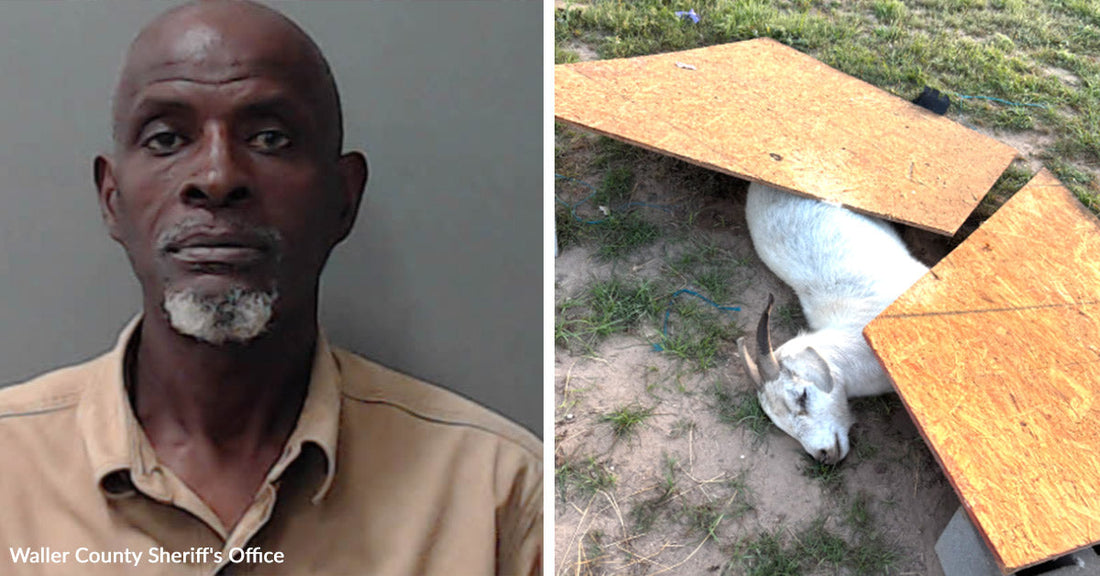
In Waller County, Texas, authorities say a recent arrest highlights just how seriously the state treats livestock theft. According to the Waller County Sheriff's Office, Douglas James Smith Sr. has been taken into custody after investigators connected him to multiple alleged thefts of livestock across several counties. The case has drawn attention not only because of the number of felony warrants involved, but also because it touches a deep cultural and legal nerve in Texas, where stealing livestock is far more than a minor property crime. For anyone unfamiliar with rural life or agricultural communities, it might be easy to underestimate the impact of livestock theft. Yet this incident points to the intersection of economic loss, animal welfare, and longstanding state law. From the details released, law enforcement worked with multiple agencies to conduct what they describe as a thorough investigation that ultimately led them to Smith Sr. in Lake Jackson. The cooperation between agencies, and the mention of special rangers focused on cattle and livestock theft, underscores that this is a crime category with dedicated resources and expertise behind it.
The Waller County Sheriff's Office has indicated that the arrest stems from thefts in more than one county, which suggests that the alleged conduct was not isolated. Livestock theft cases often span multiple jurisdictions, especially when animals can be transported across county lines quickly. According to the sheriff's office, special rangers with the Texas and Southwestern Cattle Raisers Association played a role in the investigation. That partnership is significant, reflecting a long tradition in Texas of blending local law enforcement with specialized groups that understand the economics and logistics of the cattle and livestock industry. The arrest on five felony warrants for livestock theft highlights how quickly charges can escalate when the value of the animals adds up. In Texas, stolen livestock are not simply treated as ordinary goods. Their value, both monetary and cultural, influences the severity of potential charges and penalties.

A former Waller County prosecutor, Warren Diepraam, offered context that helps explain why cases like this are treated with such gravity. Diepraam commented that there is “no faster way to find an unfriendly Texan than to steal somebody's livestock.” That single line encapsulates not only a sense of local pride but also a long history of viewing livestock as central to livelihood, heritage, and community identity. In many parts of Texas, livestock are at the core of family businesses and generational ranching traditions. When those animals are taken, it is not only an economic blow. It can feel like an attack on a way of life that has endured for decades or even longer. I found this detail striking because it connects a modern criminal case with a broader set of values that still hold strong in many rural communities.
Diepraam also explained how Texas law reflects that seriousness. Depending on the value of the livestock involved, a theft case can escalate quickly to a first degree felony. In practical terms, that level of felony can carry the possibility of life in prison. The former prosecutor noted that, historically, Texas treated livestock theft so harshly that it was once a death penalty crime. Although that is no longer constitutional and not the law today, he argued that this history serves as a powerful reflection of how seriously people in Texas view the crime of stealing livestock. This background helps frame why a livestock theft arrest involving multiple felony warrants becomes substantial local news and why it resonates with residents who understand the high stakes for ranchers and livestock owners.
Another troubling dimension in the Waller County case involves prior allegations of cruelty to livestock animals. Court records from the county reportedly show that Smith Sr. faced multiple charges in March related to cruelty to a livestock animal. Diepraam drew a link between theft and mistreatment of animals, stating that when an individual steals livestock, they often are focused solely on profit rather than the animals’ wellbeing. In his view, people who steal livestock generally do not care about proper care, feed, or humane conditions. As a result, the animals are often mistreated. He said it is not surprising when someone accused of livestock theft is also facing allegations of animal cruelty. This connection brings animal welfare into the foreground, adding another layer of concern to what might otherwise be seen only as an economic or property crime.
Livestock theft prevention and prosecution may seem niche to those outside farming and ranching communities, but the Waller County arrest demonstrates how many resources are devoted to tracking and addressing these cases. The Texas and Southwestern Cattle Raisers Association, whose special rangers assisted with this investigation, is known for focusing on livestock theft across the region. These rangers combine law enforcement training with an intimate understanding of the ranching industry, livestock markets, and the ways stolen animals can be moved or sold. In this case, their work with the Waller County Sheriff's Office and other agencies helped lead to an arrest in Lake Jackson. That collaboration paints a picture of a coordinated effort stretching beyond one county line and beyond one department’s capacity.
At a broader level, this arrest underscores the continuing relevance of livestock theft laws in a state where agriculture and ranching still play a significant role in the economy. Livestock theft in Texas is not only a legal issue. It is also framed as a community concern, particularly when animals might be mistreated in the process of being stolen and transported. When law enforcement speaks about taking such crimes seriously, it is not only about protecting property values. It is also about recognizing the human and animal stakes involved. In some communities, a string of livestock thefts can unsettle ranchers, farmers, and neighbors who depend on each other for shared security and economic stability.
While the investigation into Smith Sr. is described as ongoing, one concrete development is clear. Authorities confirm that he is now booked into the Waller County Jail. As more facts emerge, the case may offer further insight into how multi-county livestock theft operations function and how they are dismantled. For now, the arrest serves as a reminder that in Texas, stealing livestock touches on deeply held values and can lead to severe legal consequences, particularly when alleged theft is paired with prior accusations of cruelty to animals. For anyone seeking to understand how criminal justice intersects with agricultural life, Waller County’s response to this case offers a telling example of how the law, local culture, and animal welfare all come together when livestock are at the center of a crime.