
San Francisco Firefighters Carefully Free Wild Parrot After It's Head Became Wedged Between Glass
Guest Contributor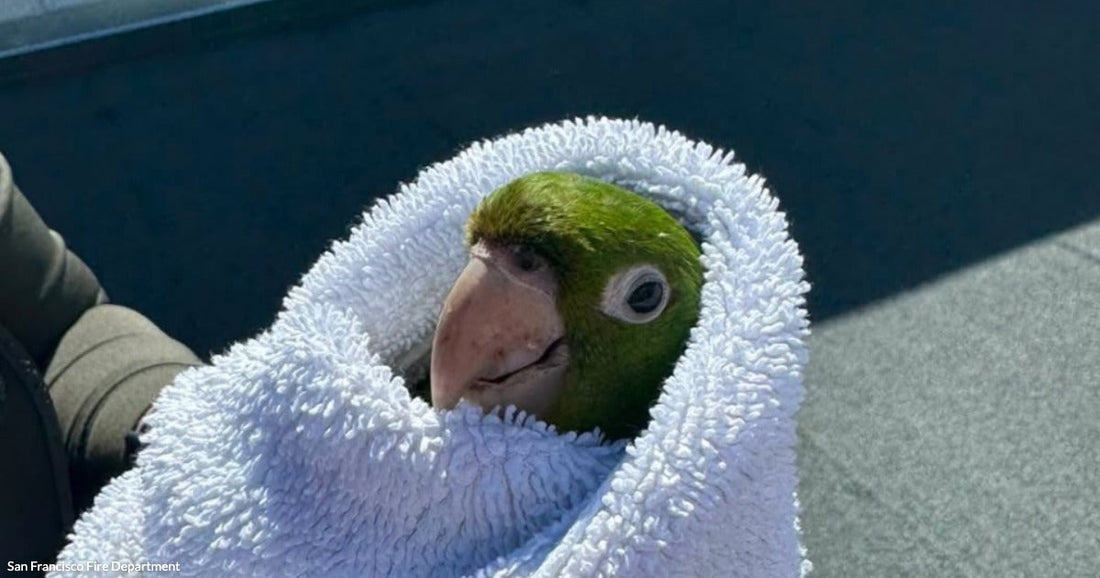
A wild parrot in San Francisco recently found itself in serious trouble after getting its head stuck between two panes of glass on a third floor balcony, and the unusual rescue has captured local attention. The incident, handled by the San Francisco Fire Department, highlights both the curiosity of urban wildlife and the calm professionalism of first responders who are increasingly called to help animals in distress. Stories about wild parrots in San Francisco have long fascinated residents, and this rescue adds another chapter to the city’s ongoing relationship with its feathered neighbors.
According to information shared by the San Francisco Fire Department, fire crews arrived at a building where the bird was trapped between two pieces of glass on a balcony several stories above the ground. It was unclear how the bird ended up in such a precarious position. There was no immediate explanation for the mishap, only the visible result of a small parrot wedged tightly in an architectural gap that was never meant to hold a living creature. The uncertainty about what caused the bird to become stuck underscores how unpredictable urban environments can be for wildlife.

Responding to the unusual call, San Francisco firefighters approached the situation the way they would any high angle or elevated rescue. Authorities reported that the crew accessed the building’s roof and then lowered a ladder down to the balcony from above. This vertical approach allowed them to reach the third floor space safely without putting additional pressure on the bird or the glass around it. It was a method that combined practical safety concerns with compassion for the trapped animal, demonstrating how first responders are prepared to adapt their tools and techniques for many different emergencies.
Once on the balcony, the firefighters worked carefully to free the parrot. The department described how the crew “carefully slid the bird up” to release it from the narrow gap. That simple phrase suggests a slow, deliberate process, with crews balancing the need for speed against the risk of causing additional harm. A bird with its head stuck between glass faces multiple dangers. There is a risk of injury from struggling, a possibility of broken glass, and the stress of confinement at a height that offers no easy escape. The fact that firefighters could slide the bird up rather than break the glass or use more forceful methods indicates a fortunate alignment of circumstance, skill, and timing.

San Francisco Fire Department
Urban animal rescue stories often highlight the quiet ways public safety teams serve communities beyond traditional emergencies. Firefighters regularly respond to calls involving pets on roofs, wildlife stuck in vents, or birds entangled in netting. This wild parrot rescue in San Francisco illustrates how that work extends to the city’s unique population of free-flying parrots. Residents have long noticed flocks of green and red birds streaking across the sky, their calls echoing between buildings. While the source material does not describe the bird’s specific species or condition after the incident, the very fact that the animal was freed at all is significant. It suggests a positive outcome in a situation that could easily have turned tragic.
The question of how the parrot became trapped remains open. Glass in city architecture can be confusing for birds, which sometimes mistake reflections for open sky or trees. Narrow spaces between panes or barriers can become unintentional hazards. While the details here are limited, the report that the bird was stuck between two pieces of glass on a third floor balcony raises the possibility that it may have attempted to land, explore, or squeeze through a space that looked safe. This kind of mishap is one more reminder that human-designed spaces can present invisible challenges to wildlife that share the same environment.
I found this detail striking because it illustrates how everyday building features can turn into obstacles for animals. Balconies, railings, and decorative glass elements are familiar to people, yet to a bird they create a landscape full of novel risks. A brief, factual account like this one encourages a bit of reflection on the ways city life is shared. Even without additional commentary in the report, it is easy to imagine residents watching from nearby windows as firefighters coordinated their work from the rooftop down to the balcony, hoping to see the parrot freed.
The way the fire department approached the situation also says something about training and preparedness. Using the roof as an access point and lowering a ladder to reach the third floor suggests that crews carefully evaluated how to keep both personnel and the bird safe. High angle access is inherently complex, even for a relatively contained rescue. The account indicates that the team chose a method that would avoid crowding the balcony from inside the building and would help maintain control over the rescue environment. In an urban setting where balconies may be tight spaces, that kind of planning can be essential.
The outcome provides a reassuring reminder of the role first responders play in protecting both people and animals. Although this wild parrot rescue in San Francisco was not described as a large-scale emergency, it clearly mattered enough for a full response. Animal incidents, whether they involve domestic pets or urban wildlife, can cause real distress for onlookers and for the animals themselves. The San Francisco Fire Department’s willingness to share the basic details suggests a recognition that even brief, successful rescues resonate with the public.
Stories like this one also highlight the importance of simple awareness. Building managers, residents, and city planners may find it helpful to consider how features like glass partitions and narrow gaps might impact urban wildlife. While not every risk can be eliminated, some hazards can be reduced through design choices that take birds and other animals into account. Even small steps such as marking glass to improve its visibility to birds, or ensuring that balconies have fewer tight, trap-like spaces, can make a difference over time.
In the end, what remains most memorable about this account is its combination of uncertainty and relief. No one knows exactly how the parrot got into trouble, but the reported actions are clear. Firefighters went to the roof, lowered a ladder, reached the balcony, and gently slid the bird free. For a brief period, a wild parrot found itself dependent on human intervention to survive an architectural mishap. Thanks to a coordinated response, that dependence was temporary. The bird was freed, the hazard resolved for the moment, and the city gained another modest yet meaningful example of how humans and urban wildlife intersect in unexpected ways. Read more at https://patch.com