
🚨Urgent: Hurricane Isaias Smashes Into the Gulf Coast! Rush Emergency Aid!
100-Year-Old WWII Veteran Pilot Soars Again in P-51 Mustang
Guest Contributor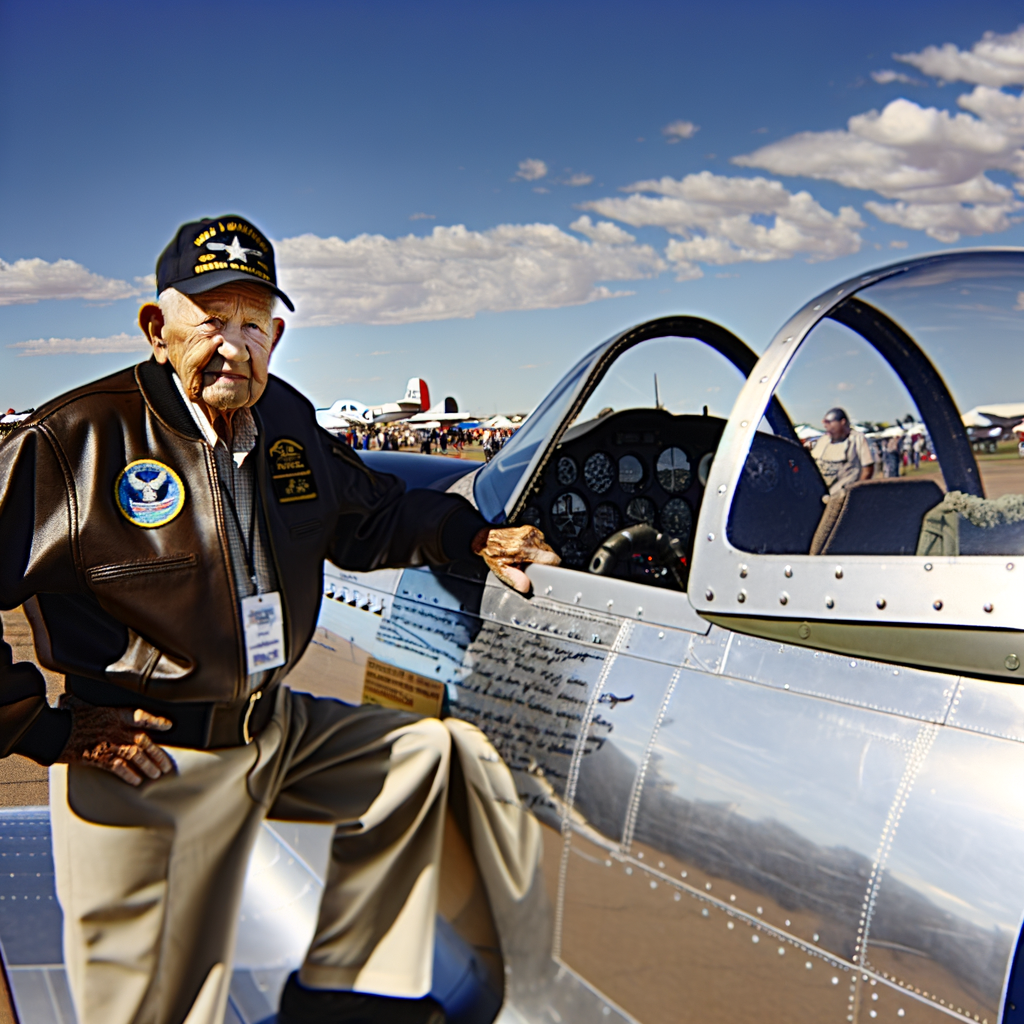
At the age of 100, retired U.S. Air Force Colonel Joe Peterburs recently took to the skies once again in a P-51 Mustang, the legendary fighter aircraft he once flew over Europe during World War II. This flight, however, was unlike any other in his long aviation career. As reported by Military Times, Peterburs was joined in the sky by his granddaughter, Sabrina, who flew alongside him in a separate Mustang, forming a close formation that brought back powerful memories—and created new ones.

This remarkable moment unfolded during the Rumble Over the Redwoods Air Show in California, where Peterburs piloted a vintage P-51H Mustang from the Redwood Coast-Humboldt County Airport. Sabrina flew in a P-51D Mustang just a few feet away, and the two shared an emotional experience above the Pacific Coast. “Her wingtip was about two feet away from mine,” he recalled. “We were flying in close formation and we were waving to each other.”
Peterburs, who flew 49 combat missions in World War II and 76 more in Korea, described the P-51 Mustang as the only plane he ever wanted to fly during the war. “It was like putting on a suit of armor,” he said, reflecting on its comfort and reliability in the skies over Germany. The Mustang’s reputation as a top-tier fighter aircraft is well known, and its role in escorting B-17 bombers made it a critical part of the Allied air campaign. Including phrases like "P-51 Mustang pilot" and "WWII veteran pilot" helps highlight the historical and personal significance of this story.
Peterburs’ journey as an aviator began in 1943 at Douglas Army Airfield in Georgia, where he trained as an 18-year-old Army aviation cadet. By December 1944, he was flying combat missions over Germany with the 55th Fighter Squadron of the 20th Fighter Group. His aircraft, named “Josephine” after his girlfriend and future wife, carried him through the skies as he protected bomber formations from enemy fighters.
One of the most dramatic moments of his wartime service came on April 10, 1945, during what would be his final combat mission. After escorting bombers, Peterburs and his squadron strafed a German airfield. His P-51 was hit by antiaircraft fire, forcing him to bail out. Captured by German forces, he was sent to a POW camp but later escaped and encountered Soviet troops. The celebration that followed included a dinner with generous toasts of wine and vodka—an experience he remembered vividly.
That same day, Peterburs also engaged a German Messerschmitt Me 262 jet fighter, a rare and formidable opponent. He opened fire on the aircraft after it had downed two B-17s, damaging one of its engines. The Me 262 disappeared into a cloud bank, and Peterburs never knew what became of it—until 60 years later. A historian identified him as the pilot who had shot down Walter Schuck, one of Germany’s top aces. The two men eventually met in 2005 and developed a friendship. Schuck, who survived by bailing out, later introduced Peterburs at air shows as “the man who saved his life.”
Peterburs’ military career extended well beyond World War II. He joined the newly formed U.S. Air Force in 1947, flew combat missions in Korea, and later transitioned to jets, including the Lockheed P-80 Shooting Star. During the Vietnam War, he served as a staff operations officer overseeing command and control operations. He eventually rose to become deputy commander of the 601st Tactical Control Wing in Europe before retiring as a full colonel in 1979. His decorations include the Distinguished Flying Cross, Legion of Merit, Purple Heart, Bronze Star, Air Medal, and POW Medal.
Returning to the cockpit of a P-51 Mustang decades later was more than a nostalgic flight. It was a tribute to those who served and a personal victory roll through time. During the air show, Peterburs performed aerobatic maneuvers, including loops and a victory roll, pulling 4Gs in the process. “I also did a victory roll,” he said with a smile, a nod to the joy and freedom he still finds in flight.
For his granddaughter Sabrina, flying alongside her grandfather was a deeply emotional experience. “Nothing could have prepared me for what it felt like to fly side by side with him in Mustangs,” she shared. “I looked over and saw him waving, blowing me kisses. My heart melted and tears welled up in my eyes.” Their shared flight, with a B-17 Flying Fortress in the lead, symbolized a living connection across generations and a powerful reminder of the sacrifices made for freedom.
Peterburs also reflected on the importance of remembering those who didn’t return. Two of his brothers were killed in World War II, a loss that continues to shape his perspective. “I like to get the word out to the younger generation about what we went through,” he said. “I hope they understand how many sacrifices young men and women made for their country, so this generation could be free and prosperous and have a decent life.”
I found this detail striking: even after a century of life and decades removed from combat, Peterburs’ sense of duty to honor the past remains as strong as ever. His story, and the flight he shared with Sabrina, offers a rare and moving glimpse into living history—one that bridges time, memory, and legacy through the enduring wings of a Mustang.