
🚨Urgent: Missile Strikes Shelter in Ukraine! Rush Emergency Aid!
100-Year-Old WWII Veteran Shares Courageous Naval Service and Kamikaze Survival
Guest Contributor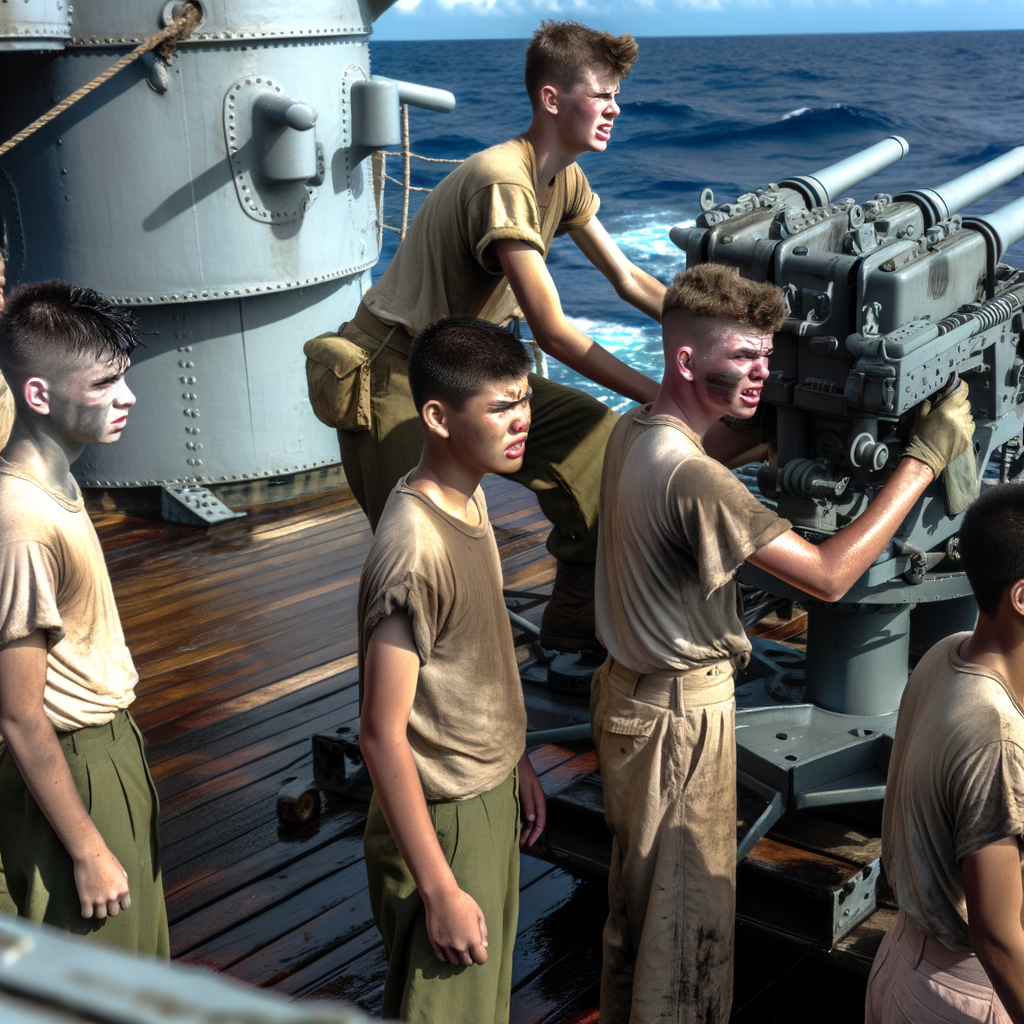
At 100 years old, Steve Ellis stands as a living testament to a generation that served with extraordinary courage during World War II. His story, recently shared with Newsweek, offers a rare glimpse into the life of a young naval officer who faced the perils of kamikaze attacks and the rigors of life at sea aboard a Landing Ship Tank (LST). For readers interested in World War II veterans, naval history, and the Pacific Theater, Ellis’s account is both sobering and inspiring.

Ellis’s journey into military service began long before he saw combat. A native of Amite, Louisiana, he enrolled in the Naval Reserve Officers' Training Corps (ROTC) at Tulane University at just 16 years old. At the time, his maritime experience was limited to navigating a canoe. Yet, within a few short years, he would be commanding the gunnery division on a 300-foot-long naval vessel. The shift from student to officer was swift and shaped by the urgency of war. By February 1944, Ellis and his ROTC classmates were commissioned and sent into active duty, with Ellis receiving his orders as a gunnery officer at the age of 19.
Landing Ship Tanks played a pivotal role in the Pacific campaign, and Ellis trained at Camp Bradford in Virginia, one of the primary hubs for LST crew preparation. These flat-bottomed ships were designed to carry tanks, troops, and supplies directly onto beaches, eliminating the need for a seaport. Ellis estimated that around 15,000 men were training at Camp Bradford during his time there. After just two weeks of instruction, he was assigned to LST 751, one of more than a thousand such vessels built rapidly and without formal names—just numbers.
As a gunnery officer, Ellis was responsible for 19 anti-aircraft guns and the fire control systems that directed them. He also led a crew whose average age was under 20, including the ship’s captain. Reflecting on that time, Ellis remarked that he believed he was capable of handling the responsibility, though in hindsight, he questioned the wisdom of placing such weighty duties on teenagers. “Looking back on it from an 80-something years’ perspective, I think they were out of their minds,” he told Newsweek.
The LST 751 sailed through the Panama Canal and into the Pacific, making stops in New Guinea and the Philippines. These regions were key staging areas ahead of the October 1944 invasion and remained active zones through the end of the war. Life aboard the ship, while often routine, was punctuated by moments of extreme danger. The crew passed time writing letters, watching films, and eagerly awaiting mail deliveries. Ellis recalled writing to his parents, brothers, and several girls back home.
One of the most harrowing aspects of Ellis’s service was the threat of kamikaze attacks. Japanese pilots, committed to suicide missions, would target Allied ships in an effort to inflict maximum damage. Ellis described the fear of knowing that someone was willing to die just to destroy your ship. His crew fired at many incoming planes, successfully downing two. In one particularly close encounter, a kamikaze aircraft flew directly toward LST 751 before veering off at the last moment and crashing into a nearby oil tanker. “He had us if he wanted us, he just didn’t want us,” Ellis reflected. He speculated that the pilot chose a more valuable target, as their ship had already unloaded its cargo.
When asked how he managed fear during combat, Ellis offered a compelling insight. He said he was never scared during the actual fighting, only before and after. “I was too busy,” he explained. This response underscores a common experience among veterans: the intense focus required during battle often leaves little room for fear, which tends to surface later, in quieter moments of reflection.
Ellis returned to the United States on May 31, 1946, a changed man. “Before the war, in college, I was majoring in class cutting and beer drinking,” he joked. “After the war, I was straight out, going to class, studying, getting good grades.” The transition from wartime service back to civilian life was not without its challenges. One of the hardest adjustments, he said, was curbing the constant swearing that had become second nature aboard the ship. Yet, he adapted, as he always had. “I was able to adapt being in the war, and I was also able to not be in it anymore.”
After trying various academic paths, Ellis eventually pursued a career in law, serving in several judicial roles. In recent years, he has volunteered at the National World War II Museum in New Orleans, a role he’s held for about a decade. “Now I do it because I think I have something to impart,” he said. In addition to his volunteer work, Ellis plays the violin, continuing to enrich his life with music and service.
His story is a poignant reminder of the resilience and adaptability of those who served in World War II. As one of approximately 66,000 surviving American veterans of the conflict, Ellis offers a firsthand account of a pivotal time in history. I found this detail striking: despite the dangers and the youth of the crew, their sense of duty and ability to rise to the occasion left a lasting impact—not only on the war effort but on their own lives afterward.