
A Young Bald Eagle Cannot Fly Until Three Months of Care Give Him Back the Sky
Guest Contributor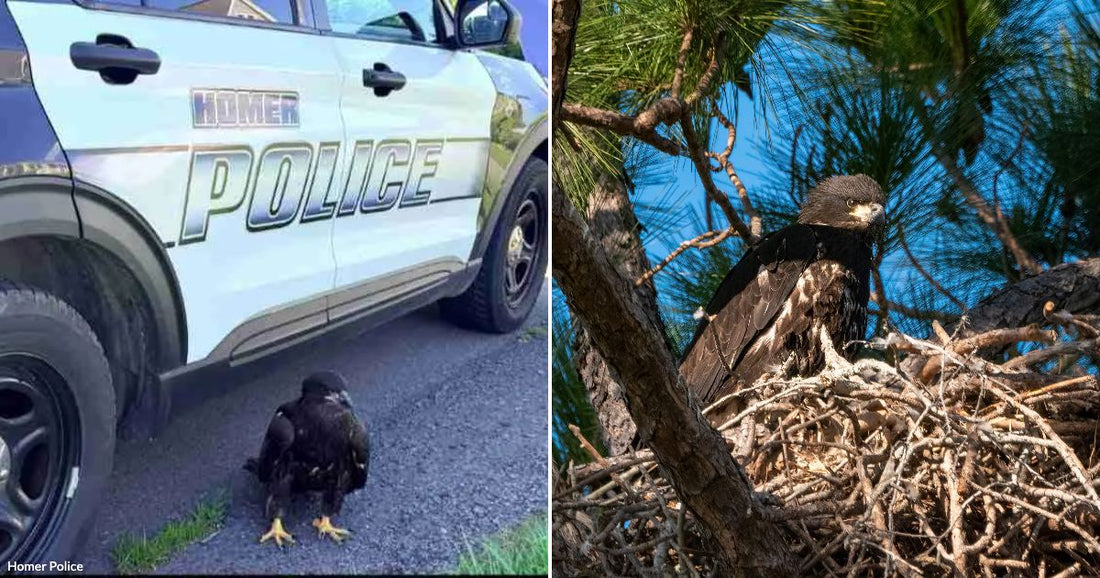
The story of a young bald eagle released after months of rehabilitation near the Village of Homer in New York carries a quietly uplifting mood. It centers on everyday people who noticed something was wrong, cared enough to act, and then worked alongside professionals to give a wild bird a second chance. For anyone who loves wildlife rescue stories or follows New York bald eagle news, this account is a reminder of how community attention and patient medical care can make the difference between loss and recovery.
The story began on July 12, when Homer resident Janie Hughes spotted a young bald eagle on her property. The bird was not soaring overhead or perched high in a tree. Instead, Hughes watched as it hopped from a swing set to a nearby fence. According to her account, the eagle tried to fly only once. After that brief attempt, it mostly stayed put, which was unusual behavior for such a powerful, typically wary bird.

What troubled Hughes was not only the eagle’s limited movement but where it might go next. Her property sits close to Route 281 near the Village of Homer, a roadway with regular traffic. She worried that the young bird could wander into the road and be struck by a vehicle. Rather than simply hoping it would recover on its own, she and her neighbor, identified only as Rick, chose to act immediately.
Hughes and Rick, working carefully and with concern for both the eagle’s safety and their own, managed to get the bird into a dog crate. Throughout the process they had help from the Homer Police Department, which responded to the situation once it was reported. Their focus was straightforward, practical, and urgent: keep the bird safe until wildlife professionals could arrive from the New York State Department of Environmental Conservation, often shortened to DEC.

Homer Police
The Homer Police Department’s account fills in more detail. Officer Warner was notified that morning of an injured bird along Route 281 near the village line. When Warner arrived, he found the eagle just outside the village limits. The officer stayed on scene and used his patrol vehicle as a protective barrier, positioning it so that passing drivers would see the hazard and the eagle would be kept away from active lanes of traffic. That decision reduced the risk of a collision that could have been fatal for the bird and dangerous for motorists.
Despite the concern that led to the rescue, Hughes later noted that the eagle did not show obvious distress. It had no visible wounds or broken wings. Instead, its behavior was subdued and still. The absence of clear physical injuries made the situation puzzling. The bird’s reluctance to fly suggested something was wrong, but the cause was not apparent at first glance.

Once the DEC arrived, the eagle was transferred for professional evaluation and care. The bird’s journey first took it to Cornell University, where it could receive thorough medical assessment and treatment. After that initial phase, it was moved to a wildlife rehabilitator in the Syracuse metropolitan area. This step is common in wildlife recovery. Universities and veterinary teams often stabilize injured or ill animals, then partner with licensed rehabilitators who provide the space, time, and specialized handling needed to prepare wildlife for a return to their natural habitat.
According to the DEC, testing eventually revealed that the young bald eagle was suffering from a blood parasite. Parasites of this kind can sap a bird’s strength, drain its energy, and compromise its ability to fly, hunt, or thermoregulate effectively. In the wild, those weaknesses quickly become life threatening. While the article does not specify the exact parasite, the detail that it required medical treatment underscores why early intervention was so crucial. Without human assistance, this eagle might not have survived.
Over the following months, the eagle remained under professional care. Wildlife rehabilitation is often a long, careful process rather than a quick fix. A bird of prey must regain strength, coordination, and stamina. It must be able to fly with confidence, capture food, and demonstrate the alertness and wariness that keep it safe once released. Throughout that time, rehabilitators minimize unnecessary human contact so the animal does not become habituated to people.
The conclusion to this story arrived on a Monday morning, when the DEC and the people who had first spotted the eagle reunited for a very different scene on the same landscape. Hughes and her neighbors watched as the young bald eagle was finally released back into the wild near the Village of Homer. Months earlier, it had been too weak or ill to fly more than once. On this day, it had the strength to reclaim the sky.
According to reports, after the crate was opened, the eagle took to the air and flew around Hughes’ home. The moment connected the original rescue site to the successful release, visually closing the loop on its recovery. The eagle circled the familiar property that had first offered it a measure of safety, then turned toward a nearby wooded area.
Hughes pointed out an eagle’s nest in those woods across a field from her home. While the article does not identify whether that nest belongs to this particular young bird’s family group, the image is compelling. A once-sick eagle lifting off near known nesting territory and gliding toward the treeline suggests a return not just to physical health but to the rhythms of its natural environment.
I found this detail striking because it highlights a broader pattern. New York has witnessed a gradual recovery in bald eagle numbers over the past several decades, supported by habitat protections, federal and state safeguards, and the work of organizations like the DEC. Each individual rescue reinforces that progress in a tangible way. A single young bird may seem like a small figure in the wider landscape, but each successful release strengthens the local population and adds to the species’ long term stability in the region.
This story also offers a simple example of how community members can support wildlife conservation without specialized training. Hughes and her neighbor recognized unusual behavior, prioritized safety, and contacted the appropriate authorities rather than attempting to manage the situation alone. The Homer Police Department responded and stayed in place until wildlife professionals could arrive. The DEC and partner institutions provided diagnosis and long term care. That chain of actions, taken calmly and cooperatively, resulted in one more healthy bald eagle back in New York’s skies.
For readers who care about raptor conservation, roadside wildlife safety, or the work of the New York State Department of Environmental Conservation, the story of this young bald eagle is both specific and widely relatable. It shows how a watchful eye on an ordinary morning can set in motion months of behind the scenes work and end in a moment of quiet triumph: a recovered bird, wings fully extended, flying home over the treetops of Homer. Read more at https://www.wxhc.com/young-bald-eagle-released-after-months-of-rehabilitation/