🚨Urgent: Missile Strikes Shelter in Ukraine! Rush Emergency Aid!
Dogs Join the Fight to Save Michigan’s Disappearing Turtles
Matthew Russell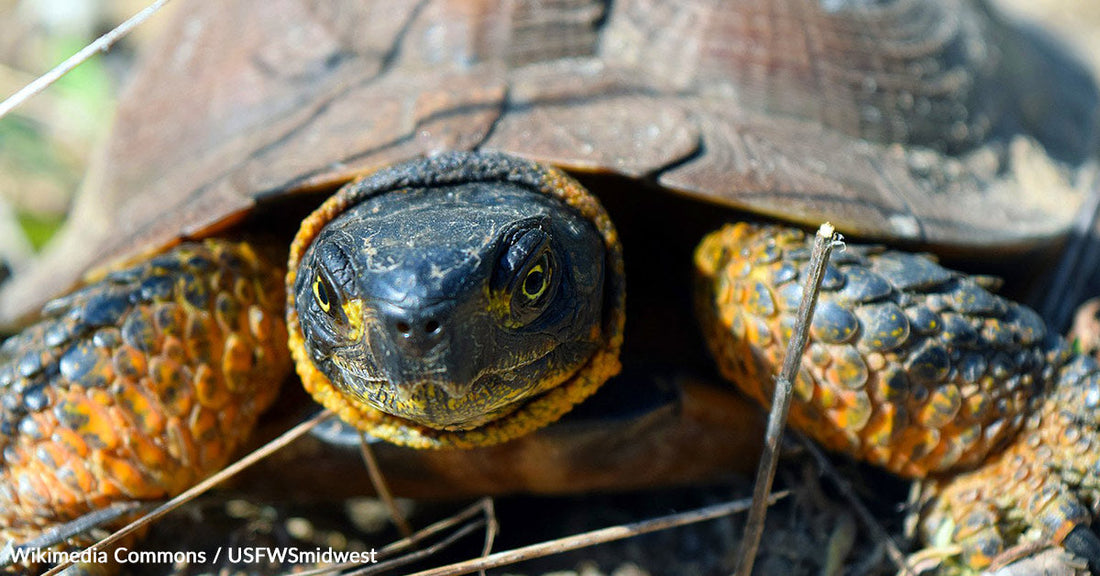
.jpg)
In the wetlands and rivers of northern Michigan, the wood turtle is quietly vanishing. Once a common sight along cool, clear streams, this species now struggles to survive. But help is coming from an unlikely source—dogs trained to sniff them out.
Canine make up some of Michigan’s most skilled turtle trackers, helping conservation teams locate the elusive wood turtle where humans often fail. For the past five years, a dog named "Mooz" has been working with Bill Parsons, a biologist with the Little Traverse Bay Bands of Odawa Indians, to locate the turtles using scent and persistence—not to mention a ball as a reward when he gets it right.
Parsons told Michigan Public Radio that Mooz picked up on the training quickly. He learned to associate turtle discovery with his favorite toy and now regularly detects turtles long before anyone else spots them.

Photo: Wikimedia Commons / Jared Green/USFWS, License: Public Domain

Wood turtles in Michigan are in rapid decline due to human and environmental pressures.
A New Nose for Conservation
Wood turtles live a life that’s tricky to track. They forage across land in the spring and summer, hiding in thick vegetation. Their brown, ridged shells blend easily with logs and underbrush. Finding them requires long hikes, river surveys, and good luck.
That’s where dogs like Mooz shine. With noses thousands of times more sensitive than a human’s, trained canines can cut hours off a search. According to The Detroit News, Mooz helps find turtles that hide completely out of sight—even under vegetation or in open areas where their camouflage fools the human eye.
During a single survey this past May, Mooz and another trained dog found over 40 turtles, with Mooz alone responsible for sniffing out nearly half of them, as Michigan Public Radio reports.

Photo: Wikimedia Commons / USFWSmidwest, License: Public Domain
Dogs trained in scent detection are helping scientists locate these hard-to-find turtles.
The Deck is Stacked Against Them
These dogs are doing more than helping science. They’re helping to save a species. The wood turtle has been listed as a Species of Greatest Conservation Need in Michigan. According to the Cool Down, habitat loss, illegal collection, and road deaths all pose serious threats to the species. Raccoons, whose populations have surged due to human development, are meanwhile raiding nests and devouring eggs, putting the turtles in greater peril.
Even with conservation efforts, most wood turtle eggs don’t hatch. And those that do are rarely seen again.
Parsons explained to The Detroit News that although detection dogs have helped uncover more juvenile turtles than traditional methods alone, the numbers are still discouragingly low—indicating those hatchlings likely aren’t surviving in the wild.
To protect the ones they do find, teams now use wire cages to guard nests, while radio transmitters track turtle movements and nesting behavior. This data helps biologists identify critical habitats—and defend them.

Photo: Wikimedia Commons / CodyPajic, License: Public Domain
.png)
Wood turtles are culturally important to the Little Traverse Bay Bands of Odawa Indians.
A Tribal and Ecological Mission
For the Little Traverse Bay Bands of Odawa Indians, this work is also cultural. The wood turtle, or Mitig-mishiikenh in Anishinaabemowin, holds deep significance. Many tribal citizens belong to the turtle clan, and protecting the animal is about more than science—it’s about honoring their origins.
Parsons told Michigan Public Radio that he takes pride in the tribe’s decision to commit resources toward preserving species that carry cultural weight, and he’s honored to contribute to that effort.
What’s Next for Mooz?
Mooz isn’t slowing down. He’s training to find the waste of endangered bat species and has a younger Labradoodle in line to learn the ropes. His success has inspired researchers across the state. The Michigan Department of Natural Resources is now exploring how detection dogs might help locate other rare species, including the eastern massasauga rattlesnake, whose winter dens are nearly impossible to find.
This creative use of canine talent is reshaping how rare wildlife is studied. As Up North Voice puts it, dogs may “prove valuable for locating other rare species,” making them essential tools in a rapidly changing natural world.
Parsons calls it a dream job—roaming the woods with your dog, catching turtles, and protecting the places that matter. Thanks to Mooz and his handlers, Michigan’s wood turtles have a fighting chance.