
The Hidden Minds Behind History's Greatest Breakthroughs Were Wired Differently All Along
Matthew Russell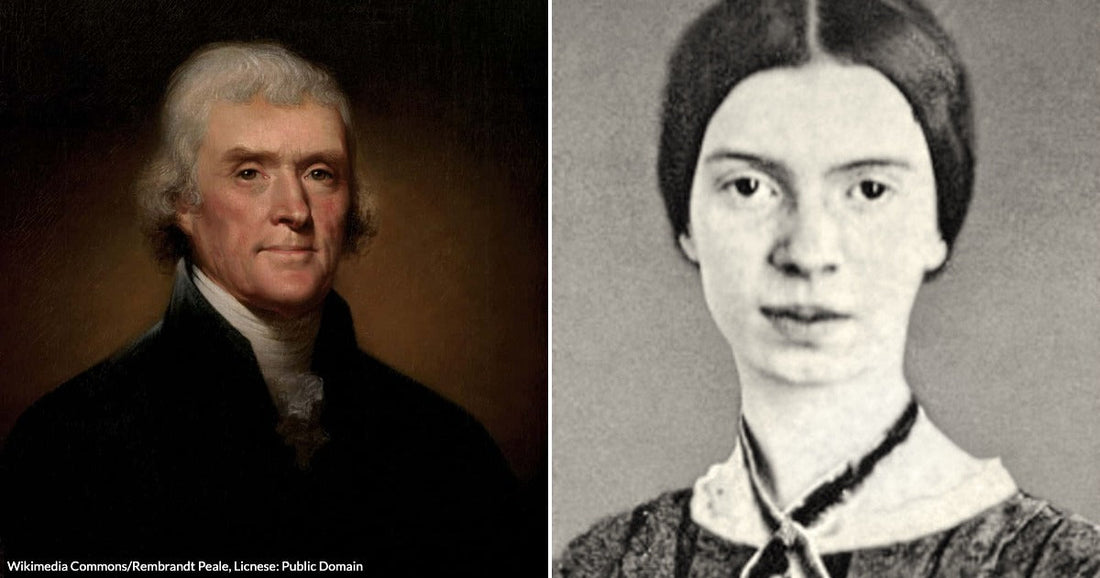
Autism was not a diagnosis available to Isaac Newton, Albert Einstein, or Nikola Tesla. The word itself barely existed in clinical use before the 20th century. Yet a growing body of researchers — psychiatrists, historians, and neuroscientists — has spent decades examining the documented behaviors of history's most extraordinary minds and arriving at a striking conclusion: many of them appear to have shared a distinct neurological profile that we now recognize as autism spectrum disorder.
No posthumous diagnosis can be confirmed. Researchers and clinicians are clear on that point, and the practice remains genuinely controversial, as The York Historian carefully examines. But the patterns — rigid routines, fierce solitary focus, sensory sensitivity, unconventional social behavior, and world-altering originality — appear again and again across these ten lives. Draw your own conclusions.

1. Albert Einstein
The physicist who rewrote the laws of the universe did not speak in full sentences until he was roughly nine years old. Autism Parenting Magazine notes that Einstein exhibited classic autistic traits, including late speech development, obsessive niche interests, and severe social communication difficulties. Cambridge professor Simon Baron-Cohen, one of the world's foremost autism researchers, has suggested that Einstein's profile was consistent with what was formerly called Asperger syndrome, based on his documented childhood solitude and his preference for solitary, taxing intellectual play over social interaction, Applied Behavior Analysis Programs reports.

2. Isaac Newton
Newton's behavior baffled everyone who knew him. He forgot to eat, delivered lectures to empty rooms when no students showed up, and once pressed a blunt needle against the back of his own eyeball to study the science of light, Applied Behavior Analysis EDU reports. Baron-Cohen reviewed his case alongside mathematician Ioan James and concluded that Newton "seemed fairly certain" to have been autistic, based on accepted diagnostic criteria. Oxford historian James went further, writing that Newton may be "the earliest known example of a person with any form of autism."

3. Nikola Tesla
Tesla's daily life ran on rituals so exact they strain belief. He ate dinner at precisely 8:10 p.m., always at the same table, served by the same headwaiter. He wiped his plates with exactly 18 napkins before each meal and walked around any building three times before entering, Applied Behavior Analysis EDU reports. His hypersensitivity to light and sound was debilitating — sunlight, he once said, felt like an explosion inside his head. He also suffered from a long list of phobias and was, by almost all accounts, profoundly alone, Applied Behavior Analysis Programs notes.

4. Charles Darwin
Trinity College Dublin professor and psychiatrist Michael Fitzgerald made a formal argument at a Royal College of Psychiatrists meeting that Darwin's traits were consistent with Asperger syndrome. Darwin was a solitary child who avoided face-to-face contact throughout his adult life, preferring to communicate almost exclusively by letter, Autism Myth Busters reports. He was, in Fitzgerald's words, "a rather obsessive-compulsive and ritualistic man" who spent eight years studying barnacles, kept rigid daily routines at his home, and systematized obsessively from adolescence onward — cataloguing beetles, then barnacles, then earthworms, and eventually all of life itself, Applied Behavior Analysis EDU reports.

5. Michelangelo
Dr. Muhammad Arshad published a peer-reviewed paper in the Journal of Medical Biography presenting formal evidence that Michelangelo met the diagnostic criteria for high-functioning autism, a conclusion Professor Michael Fitzgerald endorsed. The evidence was drawn from dozens of contemporary notes and letters, including accounts from the artist's own assistant, Applied Behavior Analysis Programs reports. Michelangelo's mentor described him as entirely unable to form or sustain any friendship. He skipped his own brother's funeral, followed rigid daily work routines without exception, and lost control when those routines were disrupted, UK Disability History Month reports.

6. Thomas Jefferson
Author Norm Ledgin wrote an entire book — Diagnosing Jefferson — arguing that the author of the Declaration of Independence met more than the minimum number of diagnostic criteria for Asperger syndrome under the DSM-IV, a position endorsed by autism expert Tony Attwood and researcher Temple Grandin, Ranker reports. Jefferson was painfully uncomfortable as a public speaker, rarely made eye contact, and was highly sensitive to loud noises. He wore slippers to official meetings and kept a pet mockingbird on his shoulder, reportedly as a way to stay calm in social situations, Autism Myth Busters notes. Historian Ron Chernow described him as "shy and aloof," with sensory-friendly clothing preferences and an unusual posture — all traits now recognized as autistic characteristics, The York Historian reports.

7. Wolfgang Amadeus Mozart
Mozart was composing full works by age six and had produced more than 600 before he died at 35. He was also, by multiple contemporary accounts, spectacularly difficult to be around. His hearing was so acute that loud sounds made him physically ill, The Art of Autism reports. On one memorable occasion, reportedly bored in a social setting, he began meowing loudly, did cartwheels across the room, and vaulted over furniture. His letters show evidence of echolalia — the repetition of phrases — a communication pattern associated with autism. Researchers have linked multiple neurological traits in Mozart's documented behavior to the autism spectrum, Autism Myth Busters notes.

8. Hans Christian Andersen
The man who gave the world "The Little Mermaid" and "The Ugly Duckling" once described the latter story as a direct reflection of his own life — an outcast who never fit the mold, Ranker reports. Andersen's personal diaries and letters reveal persistent social difficulties, repetitive behaviors, and intense, narrow interests — all consistent with autistic traits, The Tree Top notes. Psychology Today has published analysis pointing directly to autistic traits and themes in both Andersen's life and work, suggesting that his outsider perspective was not just biographical texture but the very engine of his art, Psychology Today reports.

9. Emily Dickinson
Dickinson produced nearly 1,800 poems and published fewer than a dozen of them in her lifetime. She spent most of her adult years almost entirely within her family's home in Amherst, Massachusetts, communicating with the wider world almost exclusively through letters, Historia Corner reports. Academic Julie Brown included her in the book Writers on the Spectrum: How Autism and Asperger's Syndrome Have Influenced Literary Writing, citing her reclusive lifestyle, highly unconventional poetry, exclusive preference for white clothing, and her notably stronger rapport with children than with adults, Applied Behavior Analysis Programs reports. Her sensory sensitivities and fixed daily routines have led multiple scholars to place her firmly within the conversation, Action Behavior notes.

10. Ludwig Wittgenstein
The Austrian philosopher is widely considered one of the most influential thinkers of the 20th century — and one of the most interpersonally exhausting people in any room. Contemporary letters and diary entries document his persistent irritation and inability to navigate those around him, Ron Perrier reports. His landmark work, Tractatus Logico-Philosophicus, has been cited repeatedly by researchers as a canonical example of autistic thought — logical, relentlessly systematic, and operating in a universe of its own internal rules. Both Baron-Cohen and Fitzgerald have placed Wittgenstein within their respective analyses of historical figures likely on the spectrum, Big Dreamers ABA notes.
What links these ten lives is not a diagnosis — none of them ever received one, and experts are careful to say none ever can. What links them is a pattern: the fierce inward focus, the sensory intensity, the social friction, and the staggering originality. Whether or not the label fits perfectly across centuries, the question itself opens something important — a new way of understanding not just these individuals, but the nature of human brilliance itself.