
Thousands of Australian Birds Become Paralyzed By Mysterious Condition
Michelle Milliken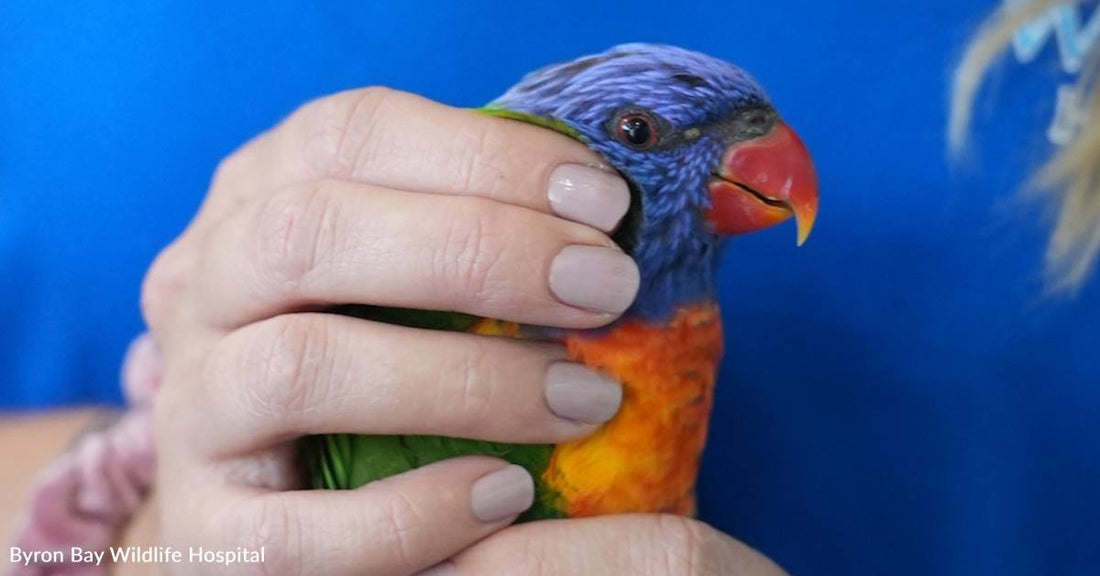
Rainbow lorikeets are a chatty, brightly colored parrot species, with feathers of yellow-orange or red, violet-blue, and yellow green. They’re found naturally in the wild in Indonesia, Papua New Guinea, and portions of Australia. In one of those areas, though, the birds suffer from a seasonal syndrome that leaves them paralyzed. We’re working to help those impacted, with your support.
Lorikeet Paralysis Syndrome, or LPS, is a seasonal condition found in wild rainbow and scaly-breasted lorikeets in southeastern Queensland and northeastern New South Wales. It’s unknown what causes the syndrome, but experts believe that because of its seasonality, it may be caused by toxic plants during blooming or fruiting season.

Photo: Byron Bay Wildlife Hospital
Though its cause is still being determined, its impacts are substantial. Each year between October and June, thousands of these birds are admitted to wildlife centers with severe symptoms, including inability to fly or stand, hindlimb weakness, and difficulty or an inability to blink or swallow.
Byron Bay Wildlife Hospital in New South Wales, which recently took in dozens of birds suffering from this condition in a short period of time, says, “While in many cases the most humane action is to relieve suffering through euthanasia, early intervention with treatments including anaethesia, fluid therapy and crop feeding sees the birds recover, returned to care and rehabilitation or released into the wild with prospects of survival."

Photo: Byron Bay Wildlife Hospital
This care and rehab can be intensive, but the wildlife hospital has an outpatient recovery area with aviaries that help the birds regain strength so they can take to the skies again. Volunteers are also essential in their recovery.
Thanks to your clicks, trivia participation, shopping for a cause, and direct donations, we’re working with our partner Greater Good Charities to support wildlife rescues as they treat lorikeets with this serious condition.

Photo: Byron Bay Wildlife Hospital
If you’d like to do more to help these colorful, resilient birds fly free again, click below!