
🚨Urgent: Missile Strikes Shelter in Ukraine! Rush Emergency Aid!
Manatees Face a Deadly Winter as Power Plants Shut Down Across Florida
Matthew Russell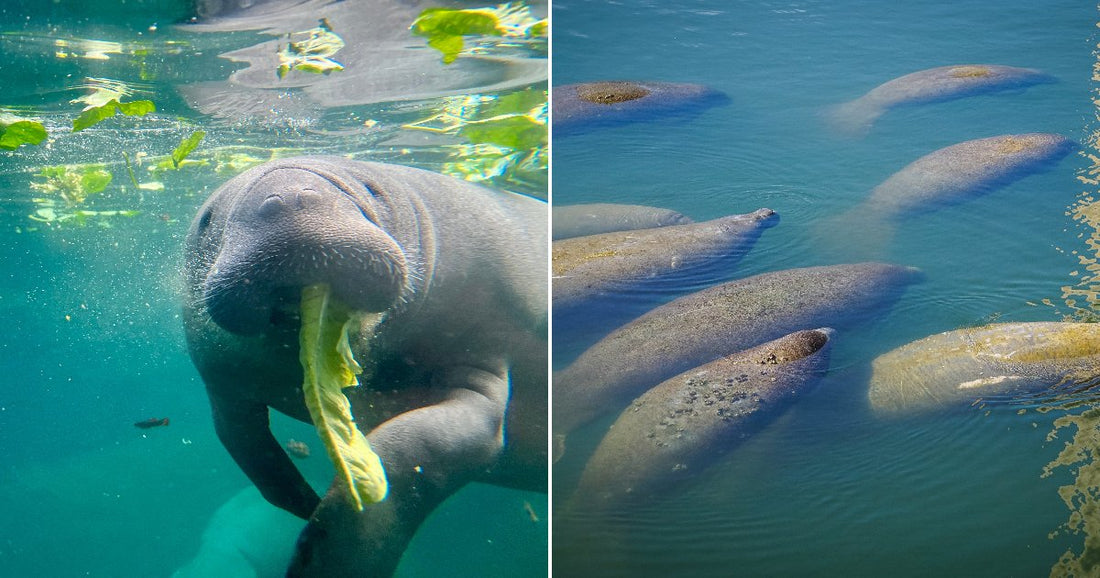
Every winter, thousands of Florida manatees crowd into the warm discharge channels of coastal power plants. The water is artificial, the warmth is industrial, and the animals have come to depend on it completely. As older power plants near the end of their operational lives, that dependence is becoming a serious problem.
Manatees are cold-sensitive mammals. Water temperatures below roughly 68 degrees Fahrenheit can trigger a potentially fatal condition called cold stress syndrome, damaging their immune systems and leaving them vulnerable to pneumonia and other infections. Florida's natural springs, which hold a steady 72 degrees year-round, once served as the species' primary winter refuge. But as The Invading Sea has reported, the population has grown far beyond what those springs can currently support, and the springs themselves have degraded over decades of reduced water flow and pollution.

Florida manatees are cold-sensitive mammals that can die from water temperatures below approximately 68 degrees Fahrenheit.
Power Plants as Accidental Habitat
The relationship between manatees and power plants dates back generations. As warm-water discharge became a reliable winter feature of Florida's coastline, manatees learned to seek it out — and passed that behavior to their calves. Today, sites like Florida Power and Light's plant at Cape Canaveral and Duke Energy's operations on the Gulf Coast host some of the largest winter aggregations in the state, sometimes numbering in the hundreds at a single location.
The problem is structural. Many of these plants are aging out of service. According to The Christian Science Monitor, as utilities transition to solar and other energy sources, the warm-water outflows manatees rely on will gradually disappear — without a natural replacement ready to take their place. That transition is not hypothetical. It is already underway.

A condition called cold stress syndrome can fatally damage manatees' immune systems when they are exposed to cold water.
What's at Stake for a Recovering Population
Manatees were removed from the federal endangered species list in 2017 and reclassified as threatened, reflecting genuine population growth. But that progress is fragile. In 2021, more than 1,100 manatees died — a record — primarily from starvation linked to seagrass loss along Florida's coasts. National Parks Traveler notes the species remains at a crossroads, with habitat pressures mounting even as conservation efforts continue.
Losing winter warm-water access would compound those pressures significantly. Cold stress events could increase. Animals conditioned to seek industrial sites would have nowhere to go. Animals Around The Globe points to spring restoration as the most ecologically durable long-term solution — restoring flow, improving water quality, and expanding access to sites that could naturally shelter manatees through cold months without any infrastructure at all.

Manatees learned to seek out power plant warm water over generations and have passed that behavior to their calves.
The Restoration Gap
Spring restoration efforts exist, but they are moving slowly relative to the pace of power plant retirements. Florida's springs have suffered from overdevelopment, agricultural runoff, and aquifer depletion for decades. Reversing that decline requires sustained funding, regulatory action, and coordination between state and federal agencies — none of which has yet matched the urgency of the timeline manatees are facing.
The U.S. Fish and Wildlife Service and the Florida Department of Environmental Protection have the authority to accelerate that work. The window to act before artificial refuges begin closing is narrowing.
Click below to make a difference.