
🚨Urgent: Missile Strikes Shelter in Ukraine! Rush Emergency Aid!
Plastic Rain — Forest Soils Fill With Plastic While We Breathe The Fallout
Matthew Russell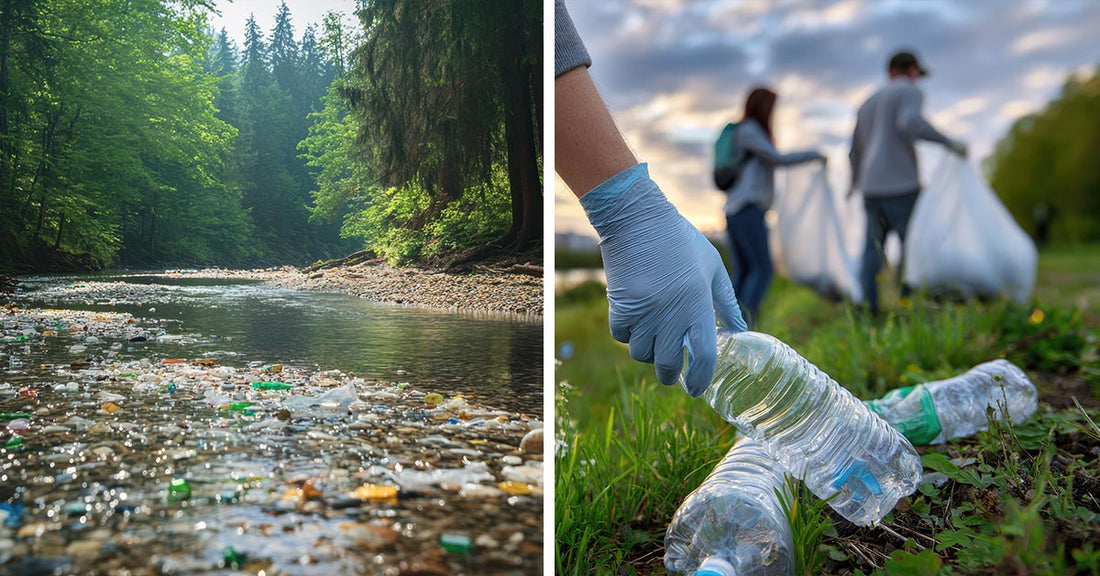
Plastic pollution is no longer confined to oceans and rivers. Forests, once thought to be untouched by synthetic waste, are now confirmed as sinks for microplastics carried by the air. Researchers at TU Darmstadt found that particles fall onto tree canopies, where rain and leaf drop send them into the soil, a process they call the “comb-out effect.”
Leaves act as nets, sweeping pollutants from the atmosphere. Soil samples from German forests revealed concentrations rivaling those in cities, with some plots containing nearly a million particles per square meter, reports Earth.com.

Microplastics arrive in forests through atmospheric deposition.
Hidden Storage Beneath the Trees
Once deposited, plastics sink deeper through decomposition and biological activity. Insects, fungi, and earthworms help drag particles down, creating long-term storage in forest soils. The particles include polypropylene and polyethylene, materials common in packaging and textiles.
A perspective published in *Microplastics and Nanoplastics* warns that forests, which cover more than a third of Earth’s land, may be an overlooked hub of global plastic cycling. The study highlights how canopy structures, rainfall, and leaf litter funnel nanoplastics into organic soil horizons, where they integrate into natural turnover cycles.

Rain and leaf fall push plastics from crowns to soil.
Consequences for Soil and Wildlife
Microplastics alter soil structure and microbial processes. According to rePurpose Global, earthworms burrow differently in contaminated soil, weakening soil health and disrupting forest flora <. The fragments also leach harmful additives such as BPA and phthalates, which interfere with the hormone systems of vertebrates and invertebrates alike.
Wildlife is at risk above the soil surface too. Animals often mistake plastic for food or become trapped in discarded packaging. This can lead to starvation, suffocation, and increased vulnerability to predators.
“The really sad thing about this is that they’re eating plastic thinking it’s food,” NOAA biologist Matthew Savoca, told rePurpose Global.

Most particles are fragments and films, not fibers.
A Global Problem
Evidence of plastics falling in rain and snow has already been documented worldwide. Even remote mangrove forests, like those in Cameroon’s Wouri Estuary, are choking on plastic debris, EOS reports. Trapped in roots and foliage, these plastics stunt growth and disrupt critical ecosystems that have supported Indigenous communities for thousands of years.
Forests of all kinds—tropical, temperate, and boreal—are part of the story. The long-term accumulation traces back to the 1950s, when plastic production skyrocketed. Decades of steady atmospheric deposition explain the levels seen today, reports Earth.com.
Threats Ahead
The implications are severe. Microplastics can hinder tree growth, shift nutrient cycles, and weaken forests already stressed by climate change. They may even enter biological cycles through tree roots, moving up into shoots and leaves.
Dr. Collin J. Weber, who led the TU Darmstadt research, warned: “Forests are already threatened by climate change, and our findings suggest that microplastics could now pose an additional threat to forest ecosystems.”
As forests act as filters for the air we breathe, their contamination signals more than ecological damage—it points to a direct human health risk. What falls on leaves today may drift into lungs tomorrow.