
Two Activists Face Terrorism Charges After Releasing Nearly 700 Minks From Fur Farm in Midnight Raid
Matthew Russell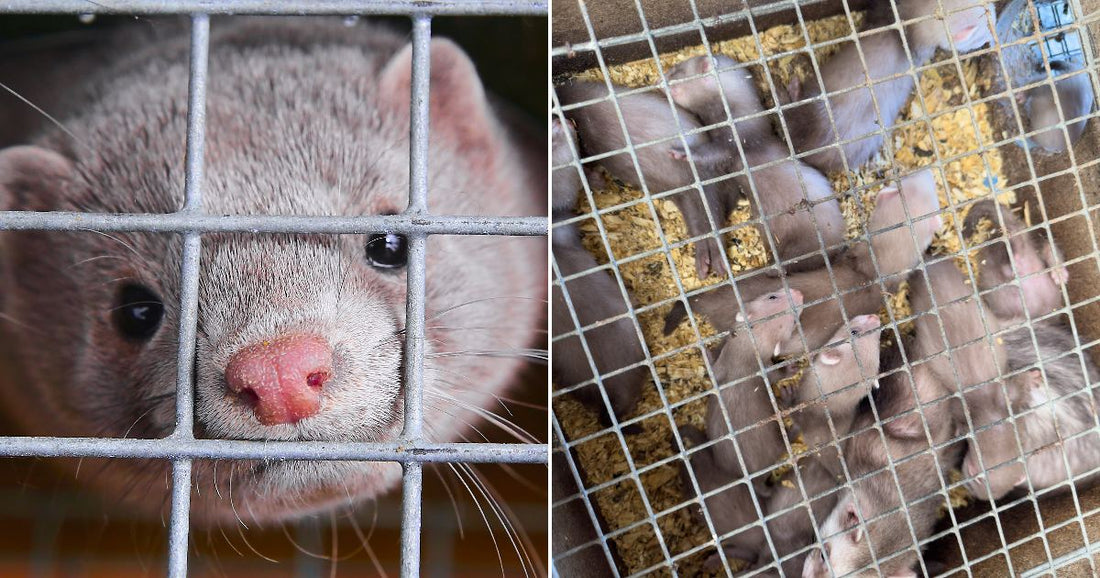
Just before 1 a.m., security cameras at the Richard H. Stahl Sons Inc. fur farm in Rockefeller Township, Northumberland County, caught two figures moving through the animal enclosures. NorthcentralPA reports that an alarm brought law enforcement racing to the scene.
By the time police arrived, the suspects were gone. The Cooldown reports that prosecutors allege Cara Ashley Mitrano and Christopher Jacob Legere, both from Worcester, Massachusetts, entered a farm building, opened cages, and released 683 minks. They also allegedly took genetic record cards used for the farm's breeding program.
Farm co-owner John Stahl spotted the suspects' vehicle — a light-colored Subaru Crosstrek with Massachusetts plates — parked in a secluded field on an adjacent property. His wife photographed it. The vehicle then struck John Stahl's car while fleeing, according to the court order filed by Judge Paige Rosini in Northumberland County Court of Common Pleas. Vehicle identification information was relayed to county dispatch, and police stopped the car in nearby Ralpho Township. Both occupants were ordered out and handcuffed. Mitrano was the passenger.

The Second Strike in a Year
This was not the Stahl farm's first ordeal. Unicorn Riot reports that the farm had been targeted before, when between 6,000 and 8,000 minks were freed in a separate incident linked to the Animal Liberation Front. No one was charged for that earlier raid.
After the second incident, the Stahl family said security cameras — installed following the first break-in — made all the difference. 2822 News notes the upgraded system alerted the farm and police almost immediately.
Farm co-owner Mark Stahl reported losses of $164,000, according to The Cooldown. All but 58 animals were eventually recovered. The Fur Commission USA warned that unrecovered minks face near-certain death within 24 to 48 hours — the animals are semi-domesticated and rely on a managed diet to survive.

A Charge Sheet That Stunned Defense Attorneys
When the full list of charges landed, it was striking. Unicorn Riot reports that Pennsylvania State Police and Northumberland County District Attorney Mike O'Donnell initially charged both defendants with RICO, ecoterrorism, agricultural vandalism, burglary, criminal mischief, theft, cruelty to animals, and a string of related conspiracy counts — charges carrying the potential for decades in prison.
An intercepted prison phone call added another explosive element. According to court documents reported by NorthcentralPA, Legere was allegedly overheard saying he had been promised $50,000 to travel to Pennsylvania and carry out the release.
Both defendants were initially held on $150,000 bail each — a figure their lawyers argued was wildly disproportionate. They were eventually released and permitted to return to Massachusetts, with a requirement to check in with Northumberland County probation twice monthly.

A Constitutional Fight Over the Word "Terrorism"
The legal argument that has drawn the most attention is the challenge to Pennsylvania's ecoterrorism statute. ABC 27 reports that defense attorney Chris Carraway, who works with the University of Denver Sturm College of Law's Animal Activist Legal Defense Project, argued the charge is unconstitutional because it singles people out based on pro-animal-rights or environmental viewpoints.
"It should concern anyone that the government can wield this power to target someone based on their perceived viewpoints," Carraway told the court, adding that the alleged conduct was "nowhere close to any commonsense definition" of terrorism, ABC 27 reports. District Attorney O'Donnell fired back, calling the defense motions "frivolous claims."
Unicorn Riot notes that Pennsylvania's ecoterrorism statute was enacted in 2006, around the same time a federal counterpart — the Animal Enterprise Terrorism Act — was signed into law.

The Judge Rules — But the Fight Isn't Over
In an order filed in Northumberland County Court of Common Pleas, Judge Rosini denied both Mitrano's motion to suppress evidence and her motion to dismiss the remaining ecoterrorism count. The court found that police had probable cause to stop and arrest the defendants, based on the totality of the circumstances: the late hour, the farm alarm, the suspicious vehicle on a posted private access road, and the farm owner's direct identification of the car.
On the constitutional question, the court held that statutes passed by the Pennsylvania General Assembly are presumed constitutional, and that the defense had not met the high burden of showing the ecoterrorism law "clearly, palpably, and plainly violates the Constitution."
Earlier in the proceedings, Judge Rosini had already dismissed one felony ecoterrorism count — the one requiring intent to intimidate — along with several other charges. NorthcentralPA reports that among the remaining counts are felony aggravated animal cruelty charges. The RICO charge was also dropped at an earlier stage.
With suppression and dismissal motions now denied, the case moves toward a jury. The Cooldown notes the outcome could become a reference point for future disputes over how ecoterrorism laws intersect with protest, animal welfare, and constitutional rights.