
🚨Urgent: Missile Strikes Shelter in Ukraine! Rush Emergency Aid!
Scientists Reveal the Hidden Switch That Turns Cats Orange
Matthew Russell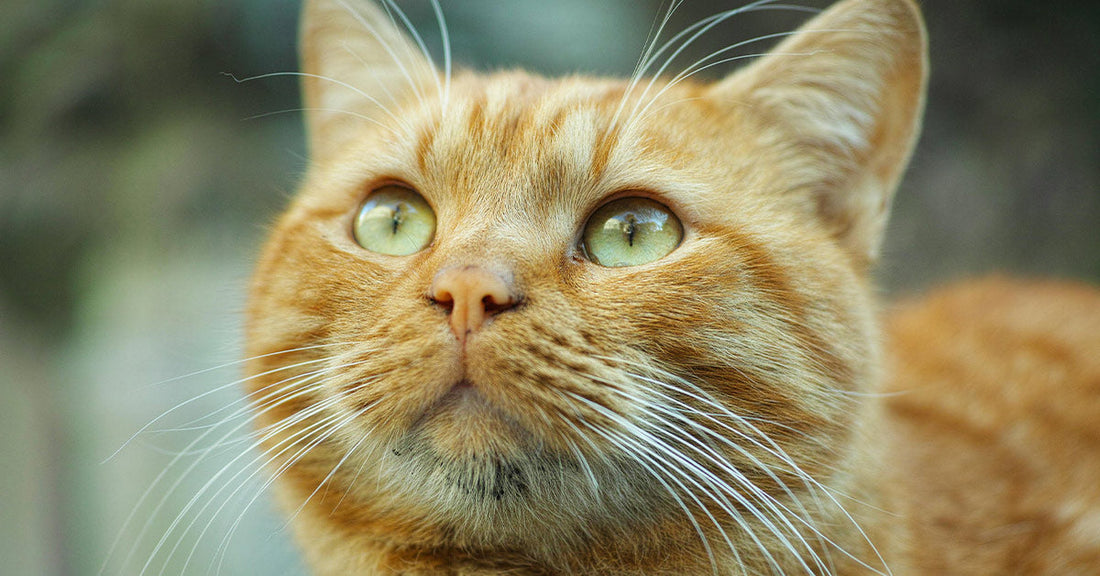
A long-running puzzle has a clean answer: a tiny deletion on the X chromosome flips a molecular switch that makes domestic cats orange. The change misactivates a nearby gene, ARHGAP36, in pigment cells—something not seen in other mammals, according to Stanford Medicine.
Lead author Christopher Kaelin called it “a really unusual type of mutation,” one that doesn’t alter a protein directly but changes when and where a gene turns on, CNN reports.

A small X-linked DNA deletion drives orange fur in domestic cats.
How a Misfiring Gene Paints Cats Orange
In orange cats, the deletion boosts ARHGAP36 activity within melanocytes and blocks a late step of the coat-color pathway, shifting output from black/brown to orange, researchers told Stanford Medicine.
“The mutation in orange cats seems to turn on ARHGAP36 expression” in pigment cells where it’s normally silent, Kaelin told New Atlas.
Kyushu University’s Hiroyuki Sasaki added that ARHGAP36 had not been linked to pigmentation before, making the mechanism a true outlier, The Independent reports.

The mutation blocks a late step that would make black or brown pigment.
Why Most Orange Cats Are Male
Because the mutation sits on the X chromosome, any male (XY) carrying it is fully orange, while females (XX) need two copies to be completely ginger. With only one copy, females display orange-black mosaics—tortoiseshell or calico—due to early-development X-chromosome inactivation.
“These ginger and black patches form because… one X chromosome in each cell is randomly switched off,” Sasaki was quoted in The Independent.
Cracking a Century-Old Riddle
To find the culprit, scientists compared DNA from orange and non-orange cats, first flagging 51 shared X-chromosome variants in orange males and then whittling them to one key deletion that regulates ARHGAP36, per CNN. The breakthrough leaned on recent cat genome resources and cheek-swab collections from cat shows and spay-neuter clinics, Stanford Medicine notes.

Males need one mutated X to be fully orange.
Ancient Roots, Modern Myths
The single mutation likely arose early in domestication; calico cats appear in 12th-century art, according to Kaelin. As for the idea that orange cats share a distinct personality, researchers found no differences in ARHGAP36 expression beyond skin, suggesting the effect is “highly specific to pigment cells,” Kaelin told ZME Science.
Behavior links remain unproven, though future work may explore them.