
Millions of Americans Risk Their Lives to Stay With Pets During Disasters
Matthew Russell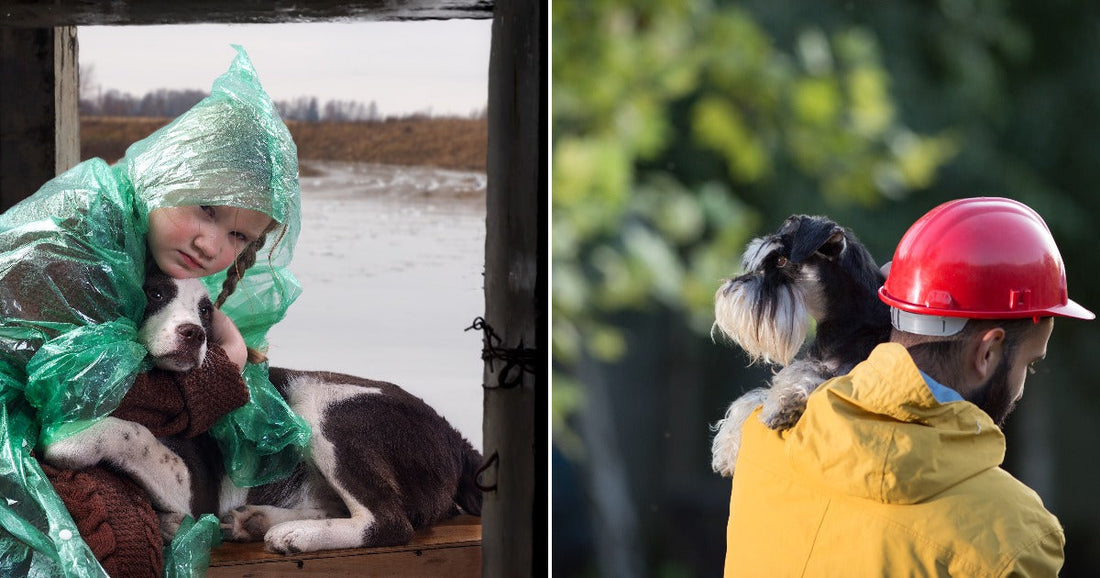
When a wildfire forces an evacuation order, most families don't hesitate — they grab what they can and go. But for millions of Americans with companion animals, that moment carries an impossible weight. If the nearest emergency shelter won't accept pets, the choice becomes: leave your dog behind, or don't leave at all.
That's not a hypothetical. It's a pattern that repeats itself every disaster season.

The Gap Between Evacuation Orders and Shelter Reality
Emergency shelters funded by federal resources have long been inconsistent in their ability to accommodate companion animals. The result is that pet owners — particularly elderly residents and people with disabilities who rely on animals for daily support — frequently delay or refuse evacuation entirely. When they stay, they put themselves, first responders, and often the animals themselves at greater risk.
The scale of that attachment is significant. Tens of millions of U.S. households include at least one pet. During major disasters, the lack of co-located or nearby pet sheltering has been directly linked to people choosing to shelter in place rather than evacuate to safety.

What's Happening in Congress Right Now
In February 2026, the 119th Congress introduced H.R. 7438, the Providing Essential Temporary Shelter Assistance for Emergencies Act — known as the PETSAFE Act of 2026. The legislation is designed to close the gap by directing federally supported emergency shelters to accommodate companion animals alongside their owners.
That effort gained momentum in May 2026, when a bipartisan Senate companion effort was introduced. According to the office of Senator Adam Schiff, the legislation was co-introduced with Senator Thom Tillis — a notable cross-aisle partnership — to ensure that companion animals and the families who depend on them are not separated during emergencies. The ASPCA publicly supported the introduction of this legislation, noting the direct connection between pet-inclusive sheltering and the likelihood that people will actually evacuate when ordered to do so.

The Cost of Inaction, Measured in Animals and Lives
The 2026 wildfire season made the stakes concrete. As fires tore through parts of Colorado, the ASPCA deployed emergency response teams to assist animals displaced by the blazes — dogs, cats, horses, and other companion animals that had been separated from their families amid the chaos of evacuation. Rescue organizations absorbed an enormous burden that coordinated, federally supported pet-inclusive sheltering could have reduced.
Each disaster that passes without a consistent national standard means more families facing that same impossible choice, and more animals left in harm's way.

A Federal Standard Is the Missing Piece
Individual states and localities have made progress, but a patchwork of local policies leaves enormous gaps. Families in one county may find a pet-friendly shelter within driving distance. Families in the next county over may find nothing. A federal requirement tied to emergency shelter funding would create a floor — not a ceiling — ensuring that no community is left without options.
The PETSAFE Act represents exactly that kind of structural fix. Bipartisan support in both chambers suggests the political will exists. What's needed now is public pressure to move it forward.
Sign the petition to urge the FEMA Administrator to expand pet-friendly disaster shelters nationwide — because keeping families together in a crisis isn't a luxury, it's a basic standard of emergency preparedness.