
Officials Ask Citizen Scientists to Report Sightings of Elusive Snake
Michelle Milliken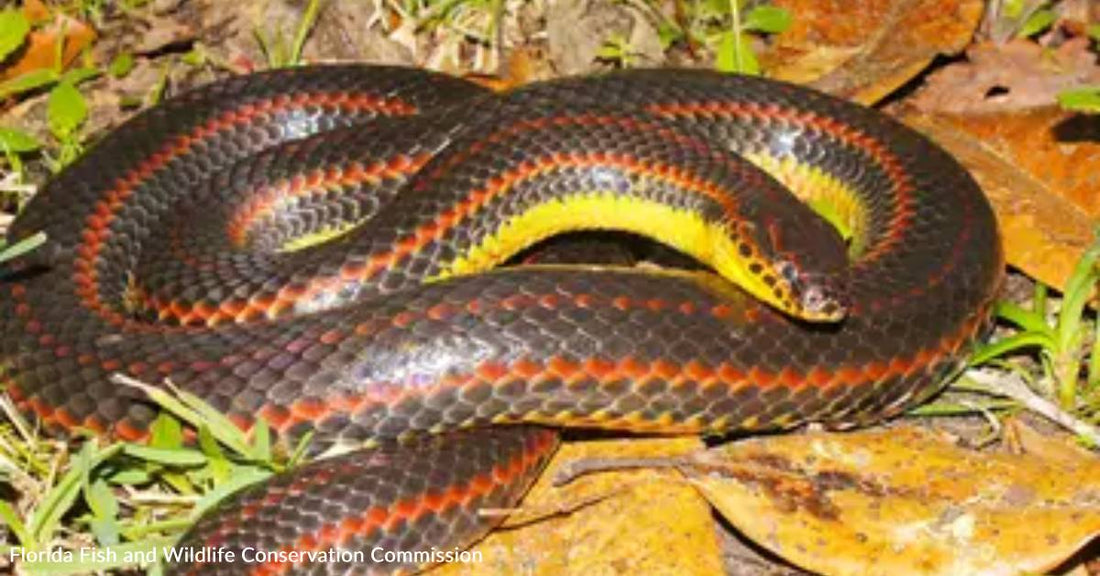
A “visually striking” snake has rarely been seen by scientists, and officials are turning to citizen science to help.
The Florida Fish and Wildlife Conservation Commission (FWC) recently issued a call to residents and visitors of Florida to be on the lookout for the rainbow snake. This elusive reptile’s numbers have fallen in recent decades, while a subspecies – the South Florida rainbow snake – hasn’t been documented since 1952 and may be extinct.

The harmless rainbow snake doesn’t pack any venom and doesn’t bite in self-defense. It’s nocturnal, which only adds to its elusiveness. That nighttime activity also masks its visually appealing appearance. FWC says the species is difficult to confuse with another snake, owing to its iridescent black or violet-blue body, with three red stripes on its back, along with yellow lip and chin scales with violet spots. Adults generally grow to between three and four feet in length.
They’re typically found in or near water, from freshwater bodies to brackish marshes, and they feed mostly on American eels. Unfortunately, American eels are declining in population, which is impacting rainbow snake numbers, as are habitat loss and snake fungal disease.

Officials say reporting any sightings can help save this unique species.
Kevin Enge, Research Scientist with FWC’s Fish and Wildlife Research Institute, says, “We need help from Floridians and visitors to better understand where rainbow snakes still occur in the state. Every sighting report gives us valuable data about their current distribution and helps us assess the health of the species in Florida.”
If you spot one, you’re encouraged to take a picture if you can and share that photo and related information with FWC at this link.