
🚨Urgent: Missile Strikes Shelter in Ukraine! Rush Emergency Aid!
Rare Glowing Marsupial: Eastern Quoll Biofluorescence Captured in Tasmania
Guest Contributor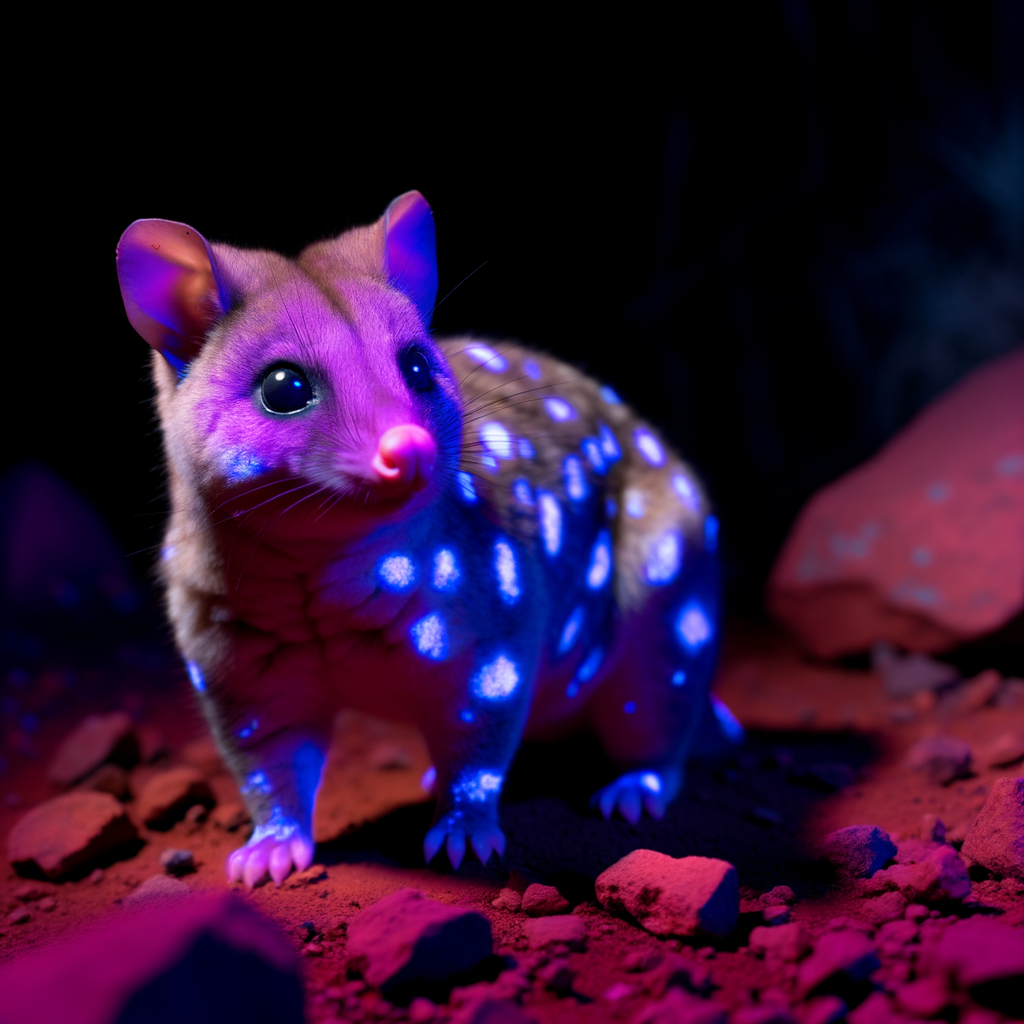
In a remarkable first, a wild Eastern quoll has been photographed glowing in the dark, marking a milestone in wildlife photography and scientific observation. The image, captured by Australian photographer Ben Alldridge, showcases the rare phenomenon of biofluorescence in a marsupial native to Tasmania. This event not only adds a vivid new chapter to the study of nocturnal animals but also raises intriguing questions about the role of light in animal behavior and evolution.

Alldridge’s photograph, taken as part of the 2025 Beaker Street Science Photography Prize, reveals the Eastern quoll (Dasyurus viverrinus) emitting a neon-like glow under ultraviolet light. This marks the first time such an effect has been documented in the species within its natural habitat. The image was made possible through the use of specialized UV-sensitive techniques, allowing light wavelengths invisible to the human eye to reveal the animal’s biofluorescent properties. According to Alldridge, the quoll’s fur, usually fawn or black, appears to glow under certain UV wavelengths, much like how a white shirt lights up under a blacklight at a disco.
Biofluorescence in animals occurs when certain proteins or pigments absorb light at one wavelength and emit it at another, typically visible under UV light. While this phenomenon has been observed in a range of species—from corals and insects to amphibians and birds—it remains relatively understudied in mammals. The Smithsonian Magazine reports that nocturnal creatures such as polar bears, moles, zebras, wombats, and armadillos have all displayed some form of biofluorescence. However, the biological purpose behind this glowing trait is still largely a mystery.
Alldridge himself speculates that the glow might function as a kind of identification system, akin to human fingerprints. While he admits this is “wild speculation at best,” the idea underscores the potential for biofluorescence to play a role in animal communication or recognition. “For now, we will just say they like to party,” he remarked in a light-hearted nod to the quoll’s disco-like appearance.
The discovery comes at a time when scientists are paying closer attention to the effects of light pollution on wildlife. Alldridge’s photo is not just a visual marvel; it also contributes to ongoing research into how artificial lighting affects nocturnal animals. According to Beaker Street Science, this image is the first documentation of the Eastern quoll glowing in the wild, and it will be used to explore how human-made light sources might disrupt natural behaviors in these species.
Light pollution can have serious consequences for wildlife. The National Wildlife Federation notes that excessive artificial lighting can lead animals to avoid certain areas or abandon habitats altogether. For species that are particularly sensitive to light, such as some nocturnal mammals, the impact can be especially severe. In extreme cases, mothers may abandon their young if their nesting areas become too brightly lit.
“The amount of light we waste illuminating space — both physical and now literal — is ridiculous,” Alldridge commented. He emphasized the importance of understanding how nocturnal adaptations work so that we can design built environments that minimize ecological disruption. His work highlights the intersection of art, science, and environmental stewardship, offering a compelling case for more thoughtful urban planning and conservation efforts.
The significance of this photograph extends beyond the scientific community. Alldridge’s image is one of 12 finalists in the Beaker Street Science Photography Prize and will be exhibited at the Tasmanian Museum and Art Gallery from August 6 to 31. Visitors to the exhibition will be invited to vote for their favorite image, with winners announced at the close of the gallery show. The festival offers a platform not only for showcasing scientific artistry but also for sparking public interest in the natural world and the hidden phenomena that surround us.
From an SEO perspective, the story touches on several compelling keyword phrases: “glowing marsupial,” “Eastern quoll biofluorescence,” “UV wildlife photography,” and “Tasmania nocturnal animals.” These terms reflect the unique blend of science, photography, and environmental awareness that this story embodies.
I found this detail striking: despite the increasing number of species found to exhibit biofluorescence, the purpose of this trait remains elusive. It serves as a reminder of how much there is still to learn about the natural world and how even well-known animals can surprise us under the right conditions. Alldridge’s work not only captures a moment of visual wonder but also opens the door to deeper scientific exploration and environmental reflection.
As research continues, the glowing Eastern quoll may inspire both scientists and the public to look more closely at the world around them—especially under different lights. Whether it’s a tool for communication, camouflage, or something yet to be understood, biofluorescence in mammals is a glowing mystery worth illuminating.