
🚨Urgent: Missile Strikes Shelter in Ukraine! Rush Emergency Aid!
The Science Behind Orange Cat Behavior and Their Playful Personalities
Guest Contributor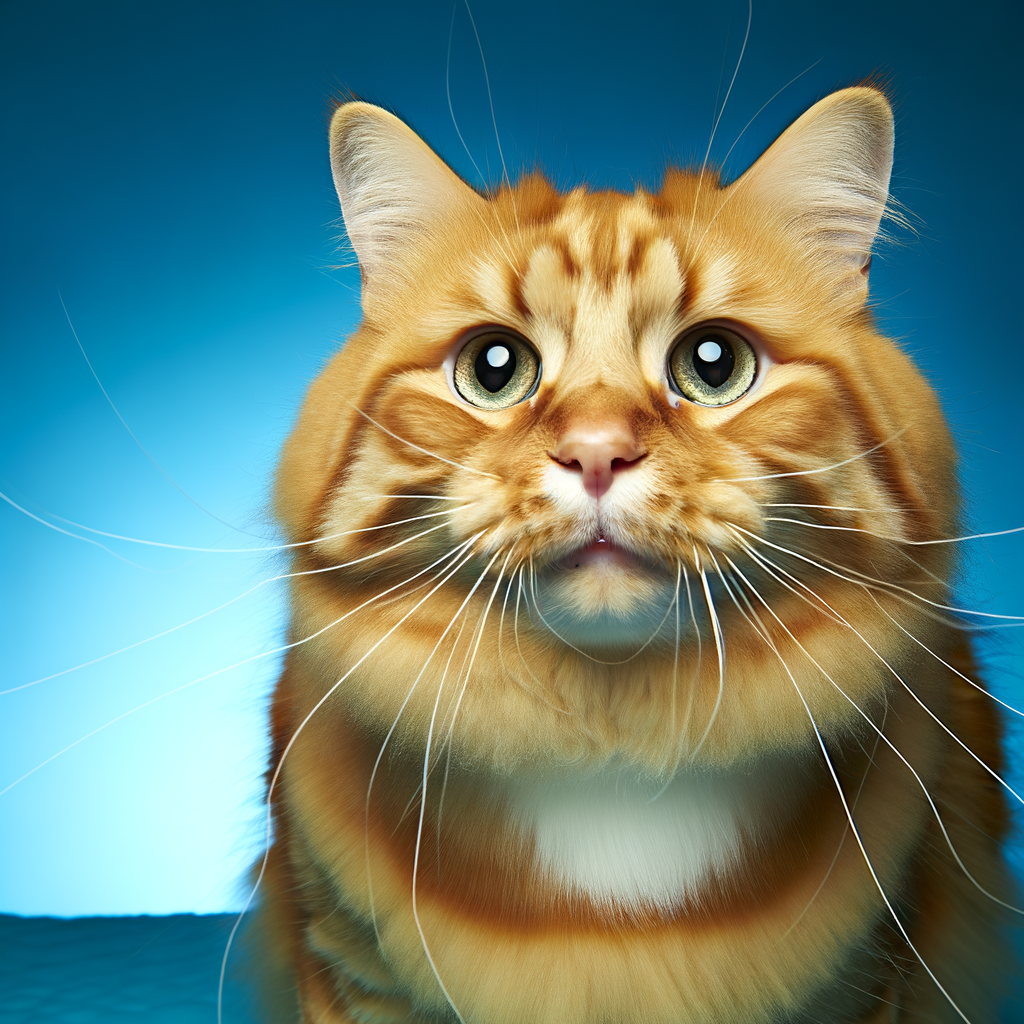
Ask any cat owner, and you're likely to hear a story or two about their orange tabby’s latest antics—leaping from countertops, ambushing the dog, or launching surprise attacks on their human's ankles. Videos of these so-called “derpy” orange cats have gone viral across social media, reinforcing the popular belief that orange cats are the goofiest of the feline world. But is there any science behind these playful personalities, or is it all just perception? Recent research into cat genetics and behavior offers some fascinating insights into the quirks of orange cats—and what might be influencing them.

To begin with, “orange cat” isn’t a breed. The orange coloration can appear in a wide range of breeds, including Maine coons, Siberians, American bobtails, and munchkins. This diversity makes it intriguing that so many pet owners believe orange cats share similar personality traits, regardless of breed. The question then becomes: could coat color really be linked to behavior?

Scientists have identified a gene responsible for orange fur in cats, known as ARHGAP36. This gene is located on the X chromosome, which plays a role in why orange cats are more commonly male. Male cats have one X and one Y chromosome, so they need only one copy of the ARHGAP36 gene to display orange coloration. Female cats, with two X chromosomes, require two copies of the gene. This genetic detail may be more than just a curiosity—it could be a clue to understanding why orange cats behave the way they do.
In 2015, a small study published in the journal Anthrozoös suggested that people are more likely to describe orange cats as friendly compared to cats of other colors. That same year, a larger study in the Journal of Veterinary Behavior offered additional evidence that coat color might play a role in feline behavior. According to Carlo Siracusa, a clinical scientist at the University of Pennsylvania and senior author of the study, while most behavioral differences were breed-related, some coat color patterns showed notable trends. For instance, lilac-colored cats appeared more playful and prone to separation anxiety, while piebald cats were quieter, and tortoiseshell cats were less aggressive toward dogs.
Interestingly, the findings on orange cats ran counter to popular belief. Siracusa noted that orange cats in their study were more likely to exhibit fear-related aggression toward unfamiliar people and showed a stronger interest in prey. These traits contrast with the widely held view of orange cats as outgoing and overly friendly. However, Siracusa also emphasized the limitations of the study, which relied on owner-submitted questionnaires rather than direct observation. This method introduces potential bias, especially if respondents already believe that orange cats are more sociable or silly.
Even so, Siracusa acknowledged that biases often stem from real-life experiences. As someone who regularly handles cats, he has noticed that male cats, in general, tend to be more outgoing than females. Since orange cats are predominantly male due to their genetic makeup, this might explain why they are perceived as more social or playful.
Another intriguing angle comes from the study of how genes influence behavior. In humans and mice, the ARHGAP36 gene has been found to be active in the brain and hormonal glands. This suggests that the same gene responsible for orange fur might also affect neurological development. Pigment cells, which determine fur and skin color, originate from neural crest cells in embryos. These cells can develop into neurons and endocrine cells that regulate activity and excitability. As geneticist Hiroyuki Sasaki from Kyushu University points out, it’s plausible that mutations in ARHGAP36 could influence temperament and behavior—but he stresses that this idea remains speculative.
I found this detail striking: the possibility that a gene associated with fur color could also have downstream effects on brain function and behavior. It highlights how interconnected biology can be, and how even something as seemingly superficial as coat color might carry deeper implications.
Still, scientists caution against drawing firm conclusions. Individual variation among cats is vast, and behavior can differ widely even within the same breed or color group. Siracusa noted that pet owners often choose animals based on expected traits, only to be surprised when their new companions behave in unexpected ways. This serves as a reminder that while genetics may nudge behavior in certain directions, each cat is ultimately an individual.
Despite the abundance of pet cats—nearly 74 million in the United States alone—many questions about their behavior remain unanswered. Research that doesn’t directly impact human or animal health often receives limited funding, leaving some of the most basic curiosities unexplored. As Sasaki puts it, “Our world is still full of mystery, and there are so many unanswered questions around us, including those that may seem very simple.”
So, are orange cats really the goofiest? The answer seems to be: maybe, but not for the reasons we think. Genetics, particularly the ARHGAP36 gene and its link to the X chromosome, may influence not just fur color but also behavior. Yet, the science is still in its early days, and much of what we believe about orange cats could be shaped by perception, anecdote, and the viral charm of social media. Until more definitive research emerges, it’s safe to say that whether orange, black, or calico, every cat brings its own unique flair to the household.