
🚨Urgent: Missile Strikes Shelter in Ukraine! Rush Emergency Aid!
Trump Administration Links Tylenol Usage To Autism
Matthew Russell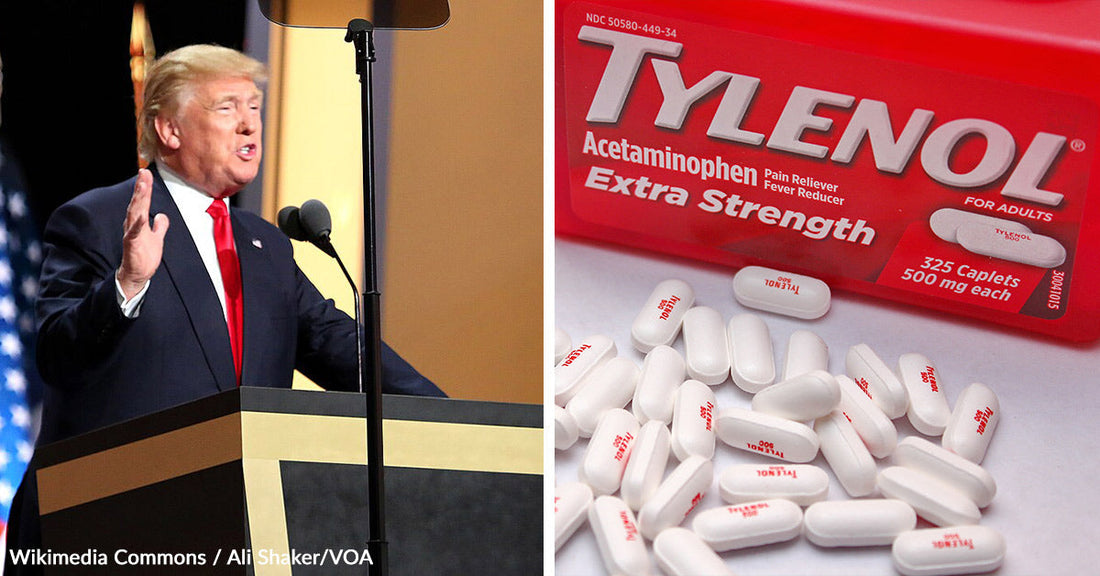
The White House has announced that acetaminophen, better known by the brand name Tylenol, could raise the risk of autism when taken during pregnancy. President Donald Trump called the revelation “one of the most important” announcements of his presidency, adding, “I think we found an answer to autism,” according to POLITICO.
Health and Human Services Secretary Robert F. Kennedy Jr. appeared alongside senior health leaders to deliver the message. Officials warned pregnant women against using Tylenol early in pregnancy unless treating a high fever. As CNBC reports, the administration also highlighted leucovorin, a form of folate sometimes used in cancer care, as a potential therapy for certain cases of autism.

Photo: Wikimedia Commons / Ali Shaker/VOA, License: Public Domain

The Trump administration has linked prenatal Tylenol use to autism.
A New Federal Stance
This will mark the first time the U.S. government has formally tied acetaminophen use to autism, The Independent reports. Trump said the announcement represents a turning point in addressing what he described as an “autism epidemic.” Kennedy has made autism a central focus of his tenure, arguing that environmental factors drive the rise in cases, though many scientists emphasize genetics and improved diagnostic practices.
The Centers for Disease Control and Prevention estimates that 1 in 31 U.S. eight-year-olds were diagnosed with autism in 2022, a sharp rise from 1 in 150 in 2000. Experts attribute much of the increase to broader diagnostic criteria and stronger awareness, CNN reports.
Medical Experts Push Back
Medical groups caution that the science behind this announcement remains unsettled. The American College of Obstetricians and Gynecologists continues to advise that acetaminophen, when used as directed, is the safest pain reliever during pregnancy.
“There is no clear evidence that proves a direct relationship between the prudent use of acetaminophen during pregnancy and fetal developmental issues,” Dr. Christopher Zahn of ACOG said in a statement to CNN.
Studies on Tylenol and autism have reached conflicting conclusions. A Swedish study of 2.5 million children found no causal link between prenatal acetaminophen exposure and neurodevelopmental disorders, while a 2025 review of 46 studies suggested a strong association but emphasized it could not prove causation. The authors recommended using the drug at the lowest effective dose for the shortest time under medical supervision.
Pediatrician Peter Hotez said focusing a national announcement on Tylenol alone is “reckless” without further evidence, noting that autism involves more than 100 genes and diverse environmental interactions, according to CNN.

Photo: Wikimedia Commons / U.S. Marine Corps Lance Cpl. Cristian L. Ricardo, License: Public Domain

The announcement marks the first U.S. government warning on acetaminophen and autism.
Company and Industry Response
Tylenol manufacturer Kenvue strongly rejected the administration’s claim. “Over a decade of rigorous research, endorsed by leading medical professionals and global health regulators, confirms there is no credible evidence linking acetaminophen to autism,” the company said in a statement to POLITICO. Kenvue also warned that discouraging Tylenol use could push pregnant women toward more dangerous alternatives.
Clinicians stress the importance of balancing risks. Untreated fever and pain in pregnancy can lead to complications such as miscarriage, low birth weight, and preterm birth, The Guardian reports.
What Parents Should Know
The federal stance now diverges from longstanding medical guidelines, setting the stage for an intense debate. While the administration points to Tylenol as a possible contributor to autism, scientific consensus remains divided. For expectant parents, doctors continue to recommend consulting with healthcare providers before making any decision about managing pain or fever during pregnancy.