Corolla Wild Horse Unable to Stand on Her Own for Days Rescued
Andrea Powell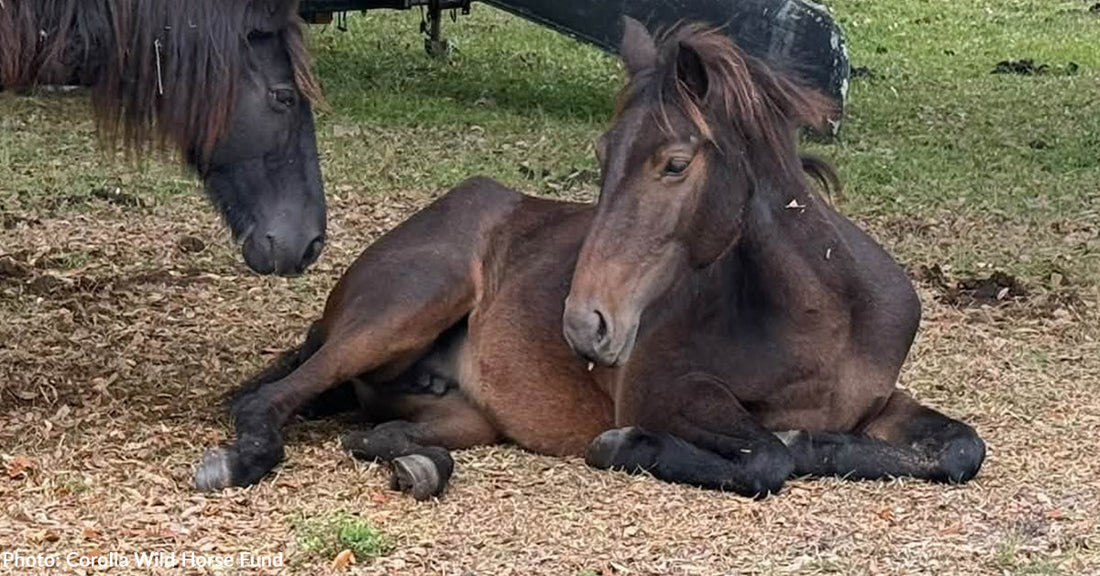
Corolla wild horses (often called Bankers) on the Outer Banks of North Carolina are managed by Corolla Wild Horse Fund (CWHF), who are on call 24 hours a day, every day of the year.
It takes a village to keep a watchful eye on the horses and alerting CWHF when a horse is down or injured. On October 12, a tour driver noticed a five-year-old mare named Beatrice down and after observing from afar noticed that she was unable to get up on her own. They contacted CWHF who immediately responded.
"We didn’t find any obvious signs of illness or injury; she was bright and alert but seemed to have no strength in her hind end," recalls staff. They administered an anti-inflammatory/pain killer to see if that would aid Beatrice in standing on her own.

Removing a banker from the wild is always a last resort because they form deep bonds with the horses in their harem and are unable to return to the wild.
The veterinarian arrived and examined Beatrice and didn't find any broken bones, injuries, or fever. Together with CWHF staff they tried to help the young horse stand up.
They shared, "Right as we were about to call it she made one last effort to stand, and with our help was able to stand all the way up. She was weight bearing on all four legs, and while a bit weak and wobbly, was able to walk. She immediately started grazing and the longer she stood the more stable she became. Because of this, we decided to leave her with her harem for the night and see how she did."

The following morning things seemed to be improving as she was found standing and grazing with her yearling and mother a mile from where she was found down the day before.
However, around 5pm a call came in from a tour guide that she was down again and unable to get up. Staff responded and gave her more medication in hopes that it would help as it seemed to the night before.
Sadly, the next morning she was still down and the tough, but necessary, decision was made to remove her and bring her back to the farm. She is settling in well and has managed to stand up once again.

CWHF posted, "Removing a horse from the wild is always a very difficult decision to make, and it’s especially hard with horses like Beatrice. She’s young and produced her first foal last year - a lovely filly. She was very deeply bonded with her own mother, and has been in the same harem with her and another older mare since she was born. So not only are we losing an exceptionally valuable broodmare from the herd, but we’re separating horses who have strong emotional bonds with each other.
"Beatrice’s dam, her daughter, and the other mare never left her side for the three days we were monitoring her in the wild. Her mom stood over her while she was down and they all stuck very close once we got her up on Monday. But when a horse can’t naturally keep up with its harem or move freely to eat and drink, that is when we begin to consider removal. In Beatrice’s case we gave her as much of an opportunity as we could to stay wild but ultimately, intervention was the right course of action not only for her own welfare but for the safety of the rest of the herd too."

Bloodwork if being performed to try and find out what is causing weakness in her hind end. She is happily grazing on hay and whinnying at the other horses.
Followers on Facebook are concerned that she may have a neurological disease called EPM (Equine Protozoal Myeloencephalitis) that affects the brain and spinal cord of horses. It is caused by ingesting food or water contaminated with feces of an infected opossum. Hind-end weakness is one of the symptoms that several followers reported their horses diagnosed with EPM had.
Beatrice is in quarantine until a diagnosis is made. She is receiving all the care she needs and is slowly adjusting to humans, allowing a few head scratches.
CWHF shared that they will share the result of her tests and any changes on their Facebook page. They are grateful for the help of so many people who made this rescue possible. Fans and followers are asked to send good thoughts to Beatrice and can contribute towards her care.
They are also keeping a close eye on her harem and reported that they are doing well.