
💜 Thanksgiving Food Drive for Shelter Pets Help Us Feed 1 Million Shelter Pets!
Beloved Polar Bear Snowflake Passes Away at Pittsburgh Zoo & Aquarium
Guest Contributor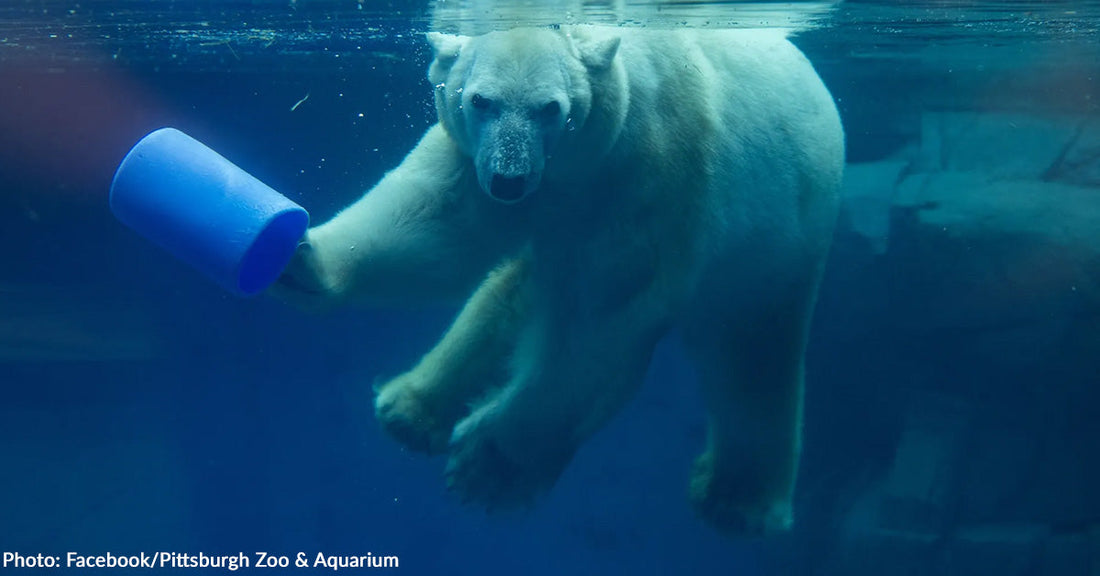
The Pittsburgh Zoo & Aquarium announced the passing of Snowflake, its beloved female polar bear, in a statement filled with both sorrow and gratitude. Snowflake was humanely euthanized on November 18, 2026, after a significant decline in her health. At nearly 31 years old, she held the distinction of being the third oldest polar bear in human care in an accredited North American facility. Her story, from her early days at the Buffalo Zoo to her years in Pittsburgh, is one that touched countless visitors and admirers who followed her journey. For anyone who has ever formed a bond with a zoo animal, the news of Snowflake’s death carries a poignant weight and invites reflection on the care and commitment that go into the life of an aging animal resident.
Snowflake’s long life far exceeded the median life expectancy for polar bears. According to the Association of Zoos & Aquariums, polar bears typically live around 20 years, which makes her 30 years an extraordinary milestone. Over time, she developed chronic health conditions that were closely associated with advanced age. The Pittsburgh Zoo & Aquarium’s veterinary team monitored her carefully, paying attention to her comfort, mobility, and overall quality of life. They treated her for a cardiac issue and a chronic skin allergy, tailoring her care to ensure she remained as comfortable and active as possible for as long as they could.
In her final week, Snowflake experienced a sharp decline that led the Zoo’s experts to make a difficult and deeply considered decision. Humane euthanasia is often the last act of compassion that veterinarians and animal care teams can offer an animal in significant distress. The Zoo reported that the decision to end Snowflake’s suffering came after considerable assessment of her condition, guided by the dual priorities of her welfare and dignity. Her age, her ongoing medical issues, and her recent downturn all contributed to the conclusion that it was time to let her go peacefully.
Snowflake’s story is not only one of longevity but also of devoted care. The Pittsburgh Zoo & Aquarium noted that a chronicle of her treatment and day-to-day adjustments was posted regularly on its website, giving guests an opportunity to follow her aging process and understand the efforts that went into supporting her. Those updates provided a transparent window into what caring for a geriatric polar bear really looks like and highlighted the continuous collaboration between veterinarians, keepers, and animal care specialists. I found this detail striking because it shows how modern zoos are inviting the public into the complex reality of animal care, especially for older residents.
Dr. Jeremy Goodman, President and CEO of the Pittsburgh Zoo & Aquarium, captured the sense of loss and appreciation in his statement. He emphasized that Snowflake’s longevity was a testament to the excellent care she received from the Zoo’s dedicated animal care staff. He also noted that she would always hold a special place in the hearts of both staff and guests. Those words reflect the emotional ties that can develop over decades, as keepers care for the same animal day after day and visitors grow up watching that animal as a familiar presence in the habitat.
Long-lived animals often become living landmarks within a zoo. Snowflake fulfilled that role within the Water’s Edge habitat, where she quickly became a favorite among guests after her arrival in 2017. People came not only to see a polar bear but to see this particular polar bear, who had her own personality and routines. The Zoo described her as a popular star of the exhibit, and that popularity likely came from repeated visits and the sense of familiarity that formed over time. Children who first saw her in elementary school may have continued to visit her into adulthood, creating a shared memory that now carries a bittersweet note.
Snowflake’s story within North American polar bear conservation began at the Buffalo Zoo, where she was born in 1995. Her move to Pittsburgh in 2017 was part of a Species Survival Plan recommendation. These plans coordinate breeding among accredited zoos to support healthy and sustainable populations of animals such as polar bears. In Pittsburgh, Snowflake was paired with the male polar bear Koda. At first, their relationship was not entirely smooth, and the Zoo recalls that the pair had a rocky start. Over time, however, they warmed up to each other, and their bond gave keepers reason to hope that a litter of polar bear cubs might result.
Although Snowflake and Koda mated several times, their pairing did not lead to a pregnancy. The Zoo reports that Koda left Pittsburgh in 2021 to be paired with a different female at another institution, following the broader goals of the Species Survival Plan. Snowflake remained a cherished presence at the Water’s Edge habitat. Her life reminds visitors that conservation breeding programs are complex and do not always yield cubs, even under ideal conditions, but the care and planning behind them are still a vital part of long-term polar bear care in human-managed settings.
Snowflake’s journey also illuminates the broader realities of polar bear care in North American zoos. As the third oldest polar bear in human care in an accredited facility, she represented what can happen when veterinary science, nutrition, and attentive daily husbandry come together over many years. Extended lifespans bring new challenges that zoo teams must navigate, such as chronic conditions, specialized medications, and habitat modifications for older animals. Through public updates on her health and behavior, the Pittsburgh Zoo & Aquarium offered a candid look at how these realities play out behind the scenes.
For many who followed her life, Snowflake’s passing underscores how deeply people can connect with animals they may only ever encounter from across a viewing window. The Zoo has invited guests to share their memories of Snowflake on its social media pages, providing a space for collective remembrance. Those memories might include a child pressed against the glass in wonder, a quiet moment watching her swim on a cold day, or simply the comfort of seeing her familiar white form resting near the water. In honoring her, visitors also recognize the teams who cared for her every day, from the beginning of her Pittsburgh chapter in 2017 to her final moments.
As the Pittsburgh Zoo & Aquarium reflects on Snowflake’s life, her legacy lives on in the stories shared by keepers, staff, and guests who knew her as more than just a polar bear. She was a long-time resident, a participant in a carefully coordinated Species Survival Plan, and a powerful ambassador who helped people learn about polar bears, aging animal care, and the responsibilities of modern zoos. Snowflake’s time in human care, far longer than the median life expectancy for polar bears, stands as a tribute to the dedication, compassion, and expertise that shaped every stage of her journey. Read more at https://www.pittsburghzoo.org/pittsburgh-zoo-and-aquarium-beloved-polar-bear-snowflake-dies/