
Forest Officials Scramble To Rescue 2-Year-Old Elephant Calf From Deep Well
Guest Contributor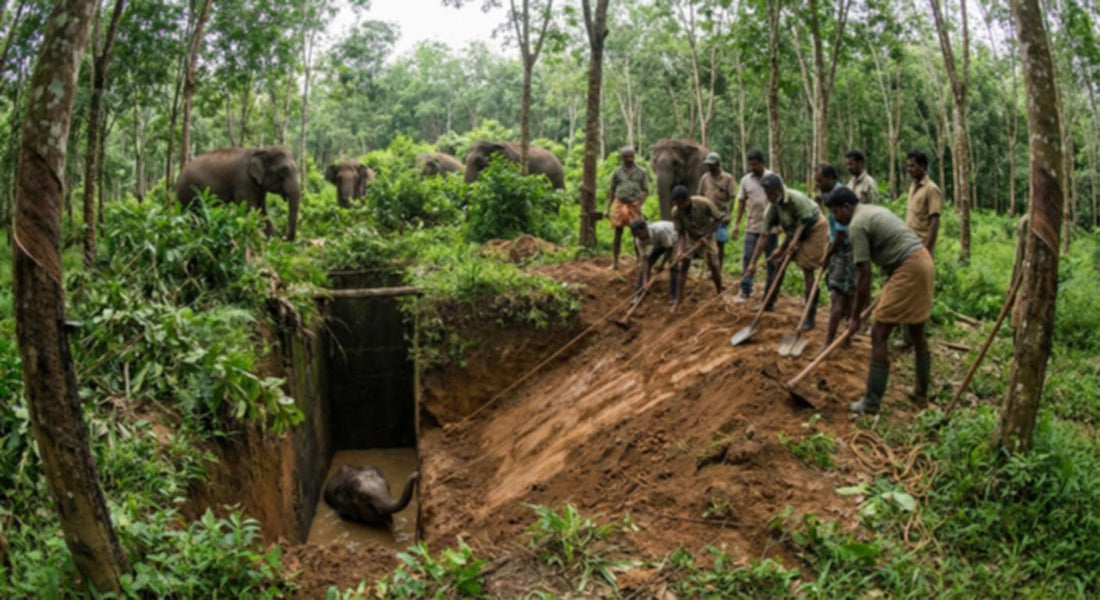
The story of a baby elephant trapped in a well in Kerala, India, reads like a tense rescue drama with a hopeful ending. In the Ernakulam district, plantation workers discovered a calf stranded 20 feet down in a narrow shaft, struggling to keep its head above water. What could have been a heartbreaking tragedy instead became a powerful example of human compassion and careful coordination, as wildlife experts and local workers teamed up to carry out a dramatic elephant rescue that ultimately gave the young animal a second chance.
According to the report, the situation unfolded on a rubber plantation where workers first heard or saw signs of distress and found the calf at the bottom of the well. The shaft was deep and tight, and water inside the well made the situation even more precarious. The baby elephant was trying to stay afloat, its head bobbing above the surface as it fought to survive long enough for help to arrive. Moments like this highlight how fragile life can be, even for an animal as strong and resilient as an elephant.

At first, the workers did not immediately rush into a rescue attempt, and their hesitation had a serious reason. The calf’s herd was nearby, and anyone who understands elephant behavior knows how protective adults can be of their young. A sudden attempt to intervene could have provoked a stampede, putting both the humans and the elephants in danger. That concern created a painful tension. The baby clearly needed help, yet moving too quickly or without a plan risked escalating the crisis instead of resolving it. The decision to pause and call wildlife experts reflected not only caution but also respect for the herd and for the workers’ own safety.
Once wildlife specialists arrived on scene, the rescue effort shifted from worry to action. Rather than attempting to haul the calf directly up the narrow shaft, which might have injured the animal or caused the walls to collapse, the team opted for a more patient and deliberate strategy. They began to dig an escape route. It was not a quick solution, and it required methodical work, but it was a plan that kept the calf’s safety at the center while also taking the surrounding elephants into account.

In that setting, every movement mattered. Imagining the scene, the ground around the well would have been carefully assessed for stability, and each shovelful of earth removed would bring rescuers one step closer to creating a path the baby elephant could navigate. While the original report keeps the details concise, the phrase “painstaking task” speaks volumes. It evokes coordinated teamwork, sweat, and persistence, likely under pressure from time and the growing concern of everyone watching.
The emotional weight of the moment is easy to picture. Plantation workers who discovered the animal, experts guiding the rescue, and anyone else who gathered to watch would all be feeling a mixture of anxiety and hope. At the bottom of the well, the calf had to keep treading water and maintaining its energy while the escape route slowly took shape. Every minute of effort carried the possibility of success or failure. The knowledge that the herd was nearby would have added a layer of urgency, since elephants are social animals and separation from the group is highly stressful for a young calf.
What followed, as the article notes, was a successful conclusion. The baby elephant had a “lucky escape,” a simple phrase that captures a complex turn of events. Luck may have been in the timing of the discovery and the presence of workers close enough to notice the crisis. Skill and planning, however, were clearly supplied by the wildlife team who knew how to conduct an animal rescue in a way that protected both humans and elephants. I found this detail striking because it underscores how effective cooperation between local communities and trained experts can be when an animal’s life hangs in the balance.
The rescue was dramatic enough that it has been shared as a video, allowing viewers far from Kerala to witness the moment the calf finally gained its freedom. Stories like this tend to resonate widely because they show people and animals intersecting in a moment of vulnerability and care. Instead of conflict, the focus is on problem solving, patience, and the shared desire to see a living being survive. For many viewers, the most memorable part will likely be the final moments when the elephant, at last, climbs out of the well and returns toward safety.
While the report does not go into detail about what happened after the calf emerged, it is reasonable to imagine a scene of relief for everyone involved. The plantation workers who had been afraid of triggering a stampede could finally breathe easier. The wildlife experts who had committed time and effort to digging that escape route could see their work pay off in the best possible way. And somewhere nearby, the rest of the herd would have one of its youngest members back. That reunion, even if not described in the article, sits at the heart of why this rescue story carries such emotional weight.
Beyond the event itself, the outlet that shared this account frames it as part of a broader effort to spotlight “good news” in a world that often feels crowded with crisis and conflict. By inviting audiences to submit their own uplifting, cute, or inspiring videos, and by offering a newsletter dedicated to positive stories, the platform positions stories like the Kerala elephant rescue as reminders that compassion remains very much alive. This particular rescue also fits into a larger pattern of human and wildlife encounters in India, a country where elephants share space with villages, farms, and plantations, and where coexistence can be complicated yet deeply meaningful.
For those looking to step away from heavy headlines, the same source encourages readers to find a “news break” through its PLAY hub, which features puzzles, games, and more. That context reinforces the idea that amid daily responsibilities and worries, there is value in pausing to absorb hopeful moments. A baby elephant clambering free from a well after a coordinated, careful rescue is not just an isolated incident. It is one example of how thoughtful human action can change the course of a life. Sharing such stories, whether by watching the rescue video, signing up for a newsletter focused on uplifting content, or exploring lighthearted activities, offers a quiet counterbalance to stress and uncertainty. In the end, the Kerala well rescue reminds us that in the face of risk and fear, empathy and expertise can work together to pull something small yet immensely important back to safety.