
🚨Urgent: Missile Strikes Shelter in Ukraine! Rush Emergency Aid!
Wild Horses Killed During Historic Nevada Helicopter Roundup
Andrea Powell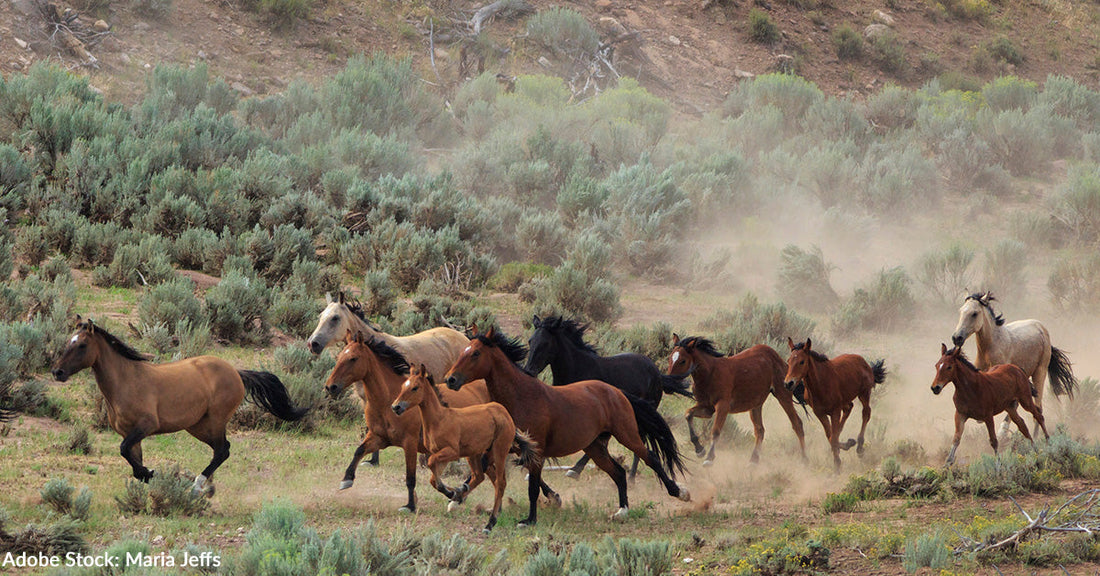
Wild mustangs have roamed free for roughly 500 years on public lands, but that freedom is being taken away from more and more of these iconic animals by the Bureau of Land Management (BLM).
There are at least 13 roundups scheduled across the West, including the Callaghan Complex in Lander County, Nevada which began on July 10.
A total of 2,000 horses will be removed across the 1.2-million-acre complex in the first wave, breaking up families and claiming lives. The BLM has a broader plan to remove up to 5,000 (largest in Nevada history) claiming it is to bring the number of horses to an "Appropriate Management Level" of 323–552 wild horses.
According to Return to Freedom, Wild Horse Conservation, "The Bureau of Land Management has captured 1,240 wild horses and killed five during the first week of its largest-ever helicopter roundup."
The deaths included two foals - one kicked in a holding pen which broke its leg and another died from colic. A young mare broke her neck, and two others were put down with one eye.
Animal activists and horse lovers are outraged and sharing their concerns about the use of helicopters and overcrowding at federal holding pens. Not to mention, the trauma and stress these poor horses are enduring, with some not surviving.

Adobe Stock: Maria Jeffs
As helicopters swoop low to chase the horses into the trap, many resist capture. Sadly, despite their best efforts of running, jumping, and rearing, they are forced into the trap and captured.
There is another more humane and proven way to reduce the number of wild horses - fertility control, with at least 90% efficacy and allows the horses to return to their homeland. No need for mass removals.
BLM is not using this method here but is instead conducting two helicopter roundups and just adding to the over 63,000 wild horses and burros in holding facilities.

Adobe Stock: Wild Horizons
BLM posted, " 1,441 wild horses were captured (603 stallions, 581 mares, and 257 foals). The federal agency aimed to remove 2,000 "excess" horses from the area."

Adobe Stock: Max
American Wild Horse Conservation (AWHC) who is on the ground documenting the roundup for all to witness as well as checking on the captured horses' welfare in temporary holding shared some insights from their field observer, Darlene Smith.
On July 14, Darlene witnessed two foals struggling. "During a run bringing horses in from the north, there were two foals walking very slow. The pilot stayed back and let them walk, however they were visibility exhausted and one of the foals kept laying down and getting up, and even rolling at times. (While we cannot diagnose a foal that far away, this is a flag that is concerning as the behaviors are a classic colic presentation.) A request was made to stop pursuing them, but it was ignored. They did finally make it to the trap and go in."
She asked about the health of the foal laying down when she was permitted to view the holding area 3.5 hours later and was told it was fine.

Adobe Stock: Maria Jeffs
My heart is breaking for all the horses running in fear for their lives and for what is being taken from them.
AWHC shared on Facebook so much is lost during these roundups. "It's more than a reduction in numbers. It's family bands that have stayed together for generations. It's the loss of learned migration routes, social bonds, and genetic diversity shaped over centuries. It's the absence of wild horses on the public lands where they've long been part of the landscape and the story of the American West."
Take a Stand for Horses
Sign this petition to call for humane solutions and protect these horses from unnecessary suffering. Be a voice for the voiceless and keep these horses where they belong- free on the open range.